The Indonesian Manufacturing Edge: How Bekasi-Sourced Toyota Components Quietly Outclass the Competition
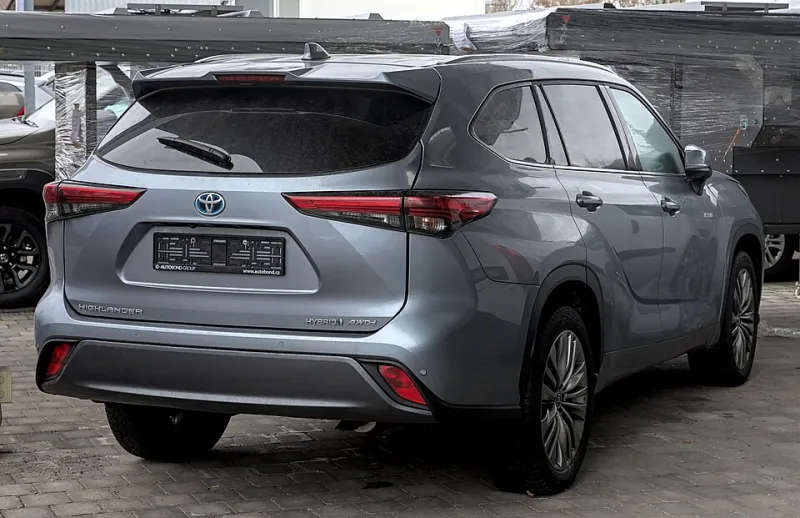
Photo: Alexander Migl, CC BY-SA 4.0, via Wikimedia Commons
When your Toyota needs a new water pump, a brake caliper, or a timing chain tensioner, the question most American drivers never think to ask is: where was this part actually made? The answer, increasingly, points to Indonesia — and specifically to manufacturing facilities operating in and around Bekasi, West Java. What those facilities produce, and why their output often exceeds the performance benchmarks set by parts manufactured in other regions, is a story that rarely surfaces in American dealership conversations.
At Pusat Toyota Bekasi, we sit close to this manufacturing ecosystem every single day. What we observe in our service bays and parts departments tells a compelling story about component quality, durability standards, and the quiet advantages that flow back to Toyota owners around the world — including those driving on American highways.
A Manufacturing Environment Built for Extremes
Bekasi is not a forgiving place for mechanical components. Average daily temperatures hover between 86°F and 95°F, relative humidity routinely exceeds 80 percent, and road conditions range from smooth toll highways to heavily rutted urban corridors that punish suspension and drivetrain components without mercy. Any part produced in this environment — or tested against the vehicles operating within it — must be engineered to withstand conditions that American roads rarely replicate with the same consistency.
This matters because Indonesian manufacturing facilities supplying Toyota's global parts network calibrate their quality thresholds against local operating realities. Thermal cycling, moisture resistance, and vibration tolerance are not theoretical benchmarks in Bekasi. They are daily survival requirements. Components that pass validation testing here carry a durability credential that more temperate manufacturing environments simply cannot replicate with the same organic rigor.
When those same components reach American Toyota owners — whether as original equipment or authorized replacement parts — they arrive pre-hardened, in a sense, against conditions more demanding than most U.S. drivers will ever encounter.
What the Failure Rate Data Actually Shows
Industry-level component failure data is notoriously difficult for consumers to access. Dealerships rarely volunteer it, and third-party mechanics seldom track part origin with enough consistency to draw reliable conclusions. But within regional service networks like ours, patterns emerge over years of real-world observation.
Brake components, rubber seals, and cooling system parts sourced from Indonesian facilities demonstrate consistently low premature failure rates — a fact attributable in part to the accelerated real-world stress testing that Bekasi's climate and road network imposes on every vehicle in the local fleet. When a rubber CV boot holds its integrity through three consecutive rainy seasons in a tropical climate, it has effectively passed an endurance test that a controlled laboratory environment would struggle to simulate.
Conversely, certain aftermarket parts manufactured in regions with less demanding quality oversight arrive in American service bays with tolerances that look acceptable on paper but degrade faster under sustained thermal and mechanical load. The difference is not always visible at installation. It shows up 18 months later when a seal fails, a bracket cracks, or a sensor delivers erratic readings.
Supply Chain Transparency and Why Dealers Go Quiet
Here is the uncomfortable truth about why most American mechanics and dealership service advisors do not volunteer this information: the parts supply chain is complicated, and transparency is rarely good for upsell margins.
When a service advisor recommends a specific replacement component, the recommendation is rarely accompanied by a breakdown of where it was manufactured, what testing protocols it passed, or how its failure rate compares to alternatives. For a dealership operating on parts margin, the incentive to educate customers about supply chain nuance is limited. For an independent mechanic working with a preferred distributor, brand loyalty often outweighs origin research.
The result is that American Toyota owners are frequently steered toward parts that cost more — or are simply more familiar — without any meaningful quality comparison being performed. In some cases, the higher-priced option genuinely is superior. In others, the Indonesian-manufactured component sitting in a different bin would outlast it by a considerable margin at a lower price point.
Testing Protocols That Cross Borders
Toyota's global parts certification framework applies uniform standards across manufacturing locations, but individual facilities bring their own additional validation layers. Indonesian plants supplying the Bekasi service network operate under both Toyota Motor Corporation's international quality management system and local regulatory standards that have been progressively tightened over the past decade.
Components cleared through these facilities undergo dimensional verification, material composition testing, and load-bearing validation before entering the distribution chain. Critically, many of these facilities also conduct real-vehicle testing on the same roads and in the same climate conditions that define Bekasi's demanding environment. This is not a paper exercise. Engineers observe how components behave under actual operating stress — information that feeds directly back into production calibration.
For American Toyota owners, this means that parts arriving from these facilities have been validated against a standard of real-world performance that purely laboratory-certified alternatives cannot always match.
What a Bekasi Service Perspective Offers American Owners
At Pusat Toyota Bekasi, our technicians work with Toyota vehicles across the full spectrum of model years, trim levels, and mileage ranges. We see what holds up and what does not — not just in theory, but across thousands of service visits annually. That accumulated observational data informs how we think about component selection, maintenance intervals, and the relationship between part origin and long-term vehicle reliability.
The insight we would offer to American Toyota owners is straightforward: ask more questions. When your dealership recommends a replacement part, ask where it was manufactured and what testing standard it carries. Request documentation if it is available. Cross-reference Toyota's own authorized parts catalog, which distinguishes between genuine OEM components and alternatives that may carry looser quality specifications.
This is not about reflexive skepticism toward American-made components. Some are excellent. It is about applying the same critical thinking to parts selection that you would apply to any significant vehicle maintenance decision.
The Broader Lesson From Bekasi's Parts Ecosystem
The global Toyota supply chain is one of the most sophisticated and geographically distributed manufacturing networks in the automotive industry. Bekasi sits at an important node within that network — not as a peripheral supplier, but as a facility producing components that meet Toyota's highest international standards while being forged, quite literally, in one of the most mechanically demanding operating environments on earth.
American Toyota owners who understand this geography hold an informational advantage. They can ask better questions, make more informed parts decisions, and — over the life of a vehicle — accumulate the kind of maintenance history that protects both reliability and resale value.
The parts story from Bekasi is not a secret. It is simply a story that most people in the American automotive retail chain have little incentive to tell. Consider this a starting point for asking them to.