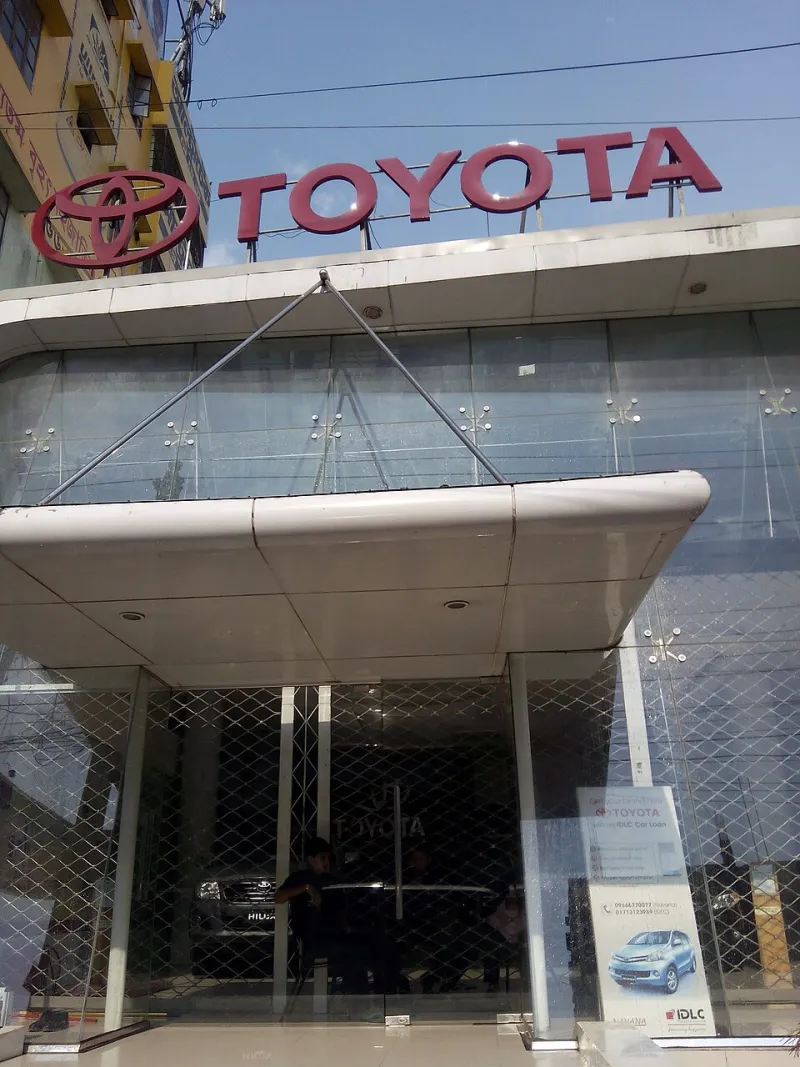
8 Toyota Maintenance Mistakes That Hot, Humid Climates Punish Harder Than Anywhere Else — Lessons From Bekasi's Service Experts
Photo: Major Lyte, CC BY-SA 4.0, via Wikimedia Commons
Bekasi is not a forgiving city for automobiles. Nestled in West Java, Indonesia, it sits in one of the most consistently hot and humid metropolitan regions on the planet — temperatures regularly hover between 86°F and 95°F year-round, while relative humidity frequently exceeds 80%. For the service technicians at Pusat Toyota Bekasi, these conditions are not an occasional challenge. They are the permanent operating environment.
The result is a service team that has developed extraordinarily refined expertise in climate-accelerated vehicle degradation. And here is the insight that American Toyota owners in the Sun Belt — from Miami to Phoenix to Houston — should take seriously: the maintenance mistakes that tropical heat and humidity punish most severely are the same ones quietly damaging vehicles in your driveway right now.
Below, our Bekasi service team breaks down the eight most consequential climate-related maintenance oversights, along with the corrective habits that protect your Toyota investment for the long haul.
1. Neglecting the Battery Beyond the 2-Year Check
In temperate climates, a car battery might comfortably last four to five years. In high-heat environments, that timeline compresses dramatically. Elevated temperatures accelerate the internal chemical reactions inside a lead-acid battery, causing water within the electrolyte to evaporate and plates to corrode faster.
At Pusat Toyota Bekasi, battery-related service calls spike every dry season. Our standard recommendation: have your Toyota's battery load-tested annually once it passes the two-year mark, regardless of whether it shows symptoms. For US drivers in states like Nevada, Arizona, and southern Texas — where summer temperatures routinely exceed 100°F — this is not overcaution. It is essential preventive maintenance.
Action step: Ask your Toyota service center to perform a battery conductance test at every oil change during summer months.
2. Skipping Coolant System Inspections
The cooling system is your engine's primary defense against heat-related damage, and in tropical or near-tropical climates, it works overtime every single day. Coolant degrades over time, losing its ability to inhibit corrosion and regulate boiling points. A compromised cooling system in a Bekasi summer — or a Houston August — is a direct path to overheating, blown head gaskets, and expensive engine repairs.
Our technicians flush and inspect cooling systems more frequently than the standard schedule suggests for temperate regions. For American drivers in the South and Southwest, following the more conservative "severe duty" maintenance intervals in your Toyota owner's manual is strongly advisable.
3. Overlooking Air Conditioning System Maintenance
This one surprises many vehicle owners: your Toyota's air conditioning system requires dedicated maintenance, not just a refrigerant top-off when it stops blowing cold. The cabin air filter, condenser coils, and evaporator drain line all require periodic attention — and in high-humidity environments, a clogged evaporator drain can allow mold and bacteria to proliferate inside your HVAC system, creating air quality problems that no amount of air freshener will resolve.
At Pusat Toyota Bekasi, we recommend annual A/C system inspections that include cleaning the evaporator drain, inspecting refrigerant levels, and replacing the cabin air filter every 12,000 to 15,000 miles — or sooner if you drive in areas with significant dust or pollen.
For US drivers in Florida, Louisiana, and coastal Gulf states: humidity-related mold growth inside Toyota HVAC systems is more common than most dealerships acknowledge. If you notice a musty smell when you first activate your A/C, schedule an inspection promptly.
4. Ignoring Rubber Seals and Weatherstripping
UV radiation and heat are relentless enemies of rubber components. Door seals, window weatherstripping, and under-hood rubber hoses all degrade faster in sun-intensive environments. In Bekasi, we regularly service vehicles whose owners are surprised to discover cracked radiator hoses or brittle door seals — components they never thought to inspect because they show no visible exterior damage.
A simple habit: during each oil change visit, ask your technician to visually inspect all accessible rubber components under the hood and around door frames. Catching a $40 hose before it fails is significantly preferable to addressing the $800 problem it causes when it does.
5. Underestimating Rust Risk in Humid Conditions
Many American drivers associate rust primarily with northern states where road salt is applied during winter. But humidity-driven oxidation is a genuine threat in the South and Southeast as well — particularly in coastal areas where salt air compounds the effect.
At Pusat Toyota Bekasi, underbody corrosion is a persistent concern despite Indonesia's complete absence of road salt. High ambient humidity is sufficient to accelerate rust formation on exposed metal surfaces. We recommend annual underbody inspections and, for vehicles in coastal US regions, periodic application of underbody protective coatings.
6. Delaying Transmission Fluid Changes
Automatic transmission fluid breaks down faster under sustained high-temperature operation. Vehicles that primarily operate in stop-and-go urban traffic — the daily reality for most Bekasi drivers, and increasingly common in congested US metros — place additional thermal stress on transmission components.
Our service team follows a more aggressive transmission fluid replacement schedule than the standard factory recommendation for vehicles operating under these conditions. For US Toyota owners who spend significant time in heavy city traffic during summer months, consulting your dealer about "severe service" fluid change intervals is a worthwhile conversation.
7. Skimping on Tire Pressure Monitoring in Heat
Tire pressure and ambient temperature have a direct relationship: for every 10°F increase in temperature, tire pressure rises by approximately 1 PSI. In climates where temperatures swing dramatically between early morning and peak afternoon — common in desert regions of the American Southwest — tires that were correctly inflated at dawn may be significantly over-inflated by midday.
Conversely, tires inflated in an air-conditioned garage may be under-inflated once the vehicle sits in direct sunlight. At Pusat Toyota Bekasi, we advise customers to check tire pressure in the morning before driving, using that reading as their baseline. Modern Toyota models with TPMS sensors provide an added safety net, but manual checks remain the most reliable habit.
8. Postponing Engine Air Filter Replacements
In dusty, high-traffic environments — and Bekasi traffic is legendarily dense — engine air filters accumulate contamination faster than the standard mileage-based replacement schedule anticipates. A clogged air filter forces the engine to work harder, reducing fuel efficiency and potentially causing long-term wear.
For US drivers in desert regions where dust and particulate matter are persistent, or in urban areas with heavy traffic congestion, visual inspection of the engine air filter every 10,000 miles is prudent. Replacement costs are minimal; the performance and efficiency benefits are measurable.
The Takeaway From Bekasi's Service Floor
Extreme climates are honest. They expose every maintenance shortcut, every deferred service visit, every optimistic assumption that your vehicle can wait another few months. The technicians at Pusat Toyota Bekasi have learned this through years of hands-on experience in one of the world's most demanding automotive environments.
The good news for American Toyota owners is that none of these lessons require exotic solutions or expensive interventions. They require attention, consistency, and a willingness to treat your Toyota's maintenance schedule as a genuine priority rather than an optional suggestion.
Your vehicle was engineered to last. The climate you drive in determines whether that engineering gets the chance to prove itself.