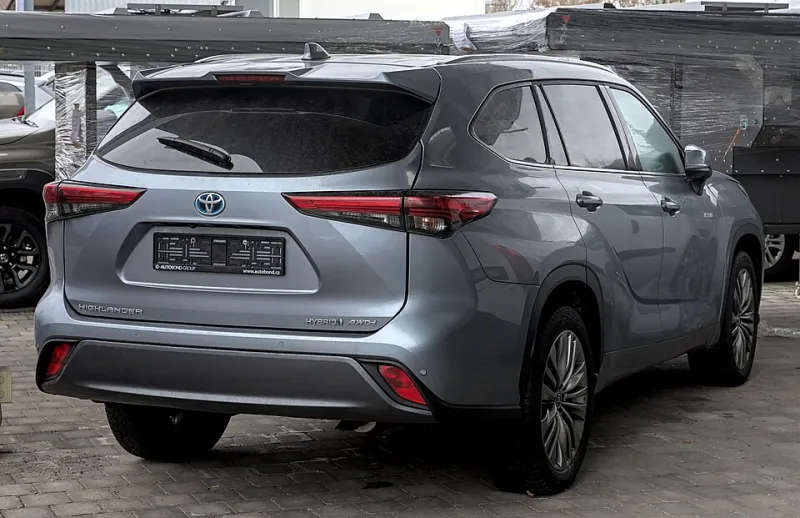
Why Savvy American Toyota Owners Are Sourcing Genuine OEM Parts Directly From Bekasi — And Saving Thousands in the Process
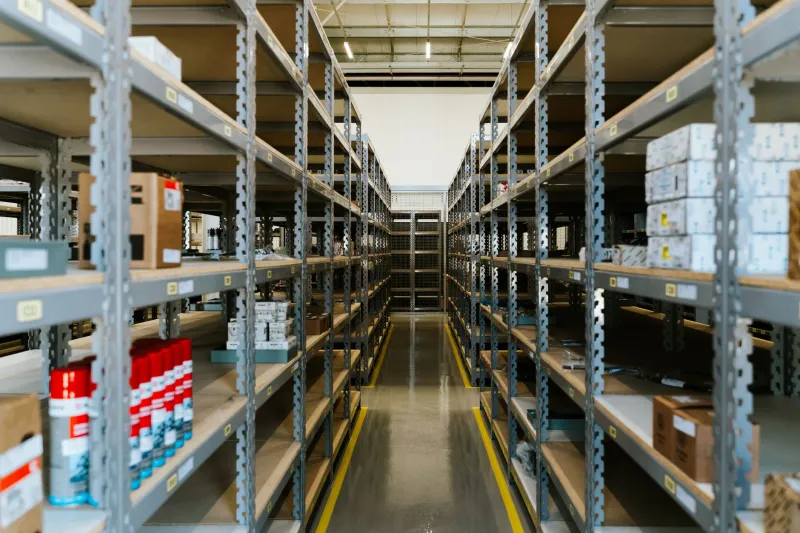
Somewhere between a routine brake job and a sticker-shock moment at the service counter, a certain kind of American Toyota owner starts asking questions. Not about the repair itself — they trust their mechanic — but about the part sitting in the box. Where did it come from? Who priced it? And is there a better way?
For a growing segment of Toyota enthusiasts across the United States, the answer to that last question has led them to an unexpected destination: Bekasi, West Java, Indonesia.
The Geography of Toyota's Supply Chain
Bekasi is not a name that appears in most American automotive conversations. Yet within Toyota's global manufacturing network, it occupies a position of considerable importance. The city is home to major production and distribution infrastructure that feeds Toyota vehicles and components throughout Southeast Asia and beyond. Proximity to PT Toyota Motor Manufacturing Indonesia — one of Toyota's most productive regional plants — means that genuine OEM parts move through Bekasi's supply chain in enormous volumes.
Volume, as any economist will confirm, tends to compress price.
When American dealerships source Toyota parts through the domestic distribution network, several layers of markup are applied before a component reaches the service bay. Importation costs, regional distributor fees, dealership overhead, and standard retail margins all stack on top of the manufacturer's base price. By the time a genuine OEM water pump or timing belt tensioner arrives at your local Toyota service center in Ohio or Texas, its price may bear little resemblance to what that same part costs at a dealership-affiliated outlet in Bekasi.
The difference, in many documented cases, approaches fifty percent or more.
What "Genuine" Actually Means Here
Before exploring the logistics, it is worth addressing the most common concern American buyers raise: authenticity. The global auto parts market has a well-documented counterfeit problem, and skepticism toward foreign-sourced components is entirely reasonable.
However, the parts available through authorized Toyota channels in Bekasi — including those sold at Pusat Toyota Bekasi and similarly certified dealerships — carry the same Toyota Genuine Parts designation as components sold in the United States. They are manufactured to identical specifications, bear the same part numbers, and in many cases originate from the same regional production facilities that supply multiple global markets.
The distinction is not in the part itself. The distinction is in the distribution chain that delivers it.
American buyers who conduct due diligence — verifying part numbers against Toyota's global catalog, purchasing through authorized dealer networks rather than informal resellers, and retaining documentation of origin — are acquiring the same components their domestic dealership would install, at a substantially reduced cost.
The Logistics Reality: What It Actually Takes
This is where the conversation becomes more nuanced. Sourcing parts from Bekasi is not a casual undertaking, and it is worth being candid about the practical complexity involved.
International shipping of automotive components introduces lead times that domestic parts procurement does not. A brake caliper ordered from a Bekasi-based authorized dealer may take anywhere from ten days to three weeks to arrive in the United States, depending on shipping method and customs processing. For emergency repairs, this timeline is obviously impractical. For planned maintenance — timing belt replacements, suspension overhauls, scheduled fluid system components — the window is entirely workable.
Customs duties represent another variable. Under current US import regulations, automotive parts are subject to applicable tariff classifications, and buyers should calculate these costs into their total landed price before assuming the savings will be as dramatic as the base price differential suggests. Even after duties and shipping, many buyers report net savings in the range of twenty to forty percent on higher-cost components.
Some American Toyota owners have taken the strategy a step further, coordinating bulk purchases across multiple vehicles or splitting orders with other owners in enthusiast communities. The economics of this approach can be compelling, particularly for owners maintaining older Tacomas, 4Runners, or Land Cruisers where certain components carry significant domestic markups.
The Legal Framework: Parallel Imports and Personal Use
A question that frequently arises in online forums and enthusiast communities: is this legal?
The straightforward answer is yes, with appropriate qualifications. Importing genuine OEM automotive parts for personal vehicle use is legal under US customs regulations, provided applicable duties are paid and the parts are not subject to any active trade restrictions. Genuine Toyota components purchased through authorized channels do not implicate trademark or intellectual property concerns in the way that counterfeit goods would.
For quantities that suggest commercial resale rather than personal use, different regulatory considerations may apply, and buyers operating at that scale should consult an import compliance professional. For the individual owner sourcing a set of genuine Toyota brake rotors or an OEM-spec timing kit, the legal picture is generally uncomplicated.
Why Bekasi Specifically — And What It Says About Toyota's Global Strategy
It is worth reflecting on why Bekasi has emerged as this particular focal point rather than another Toyota-producing region. The answer lies partly in Toyota's deliberate investment in Indonesian manufacturing capacity and partly in the country's role as a regional parts distribution center for Southeast Asia.
Indonesia's domestic automotive market is substantial and price-sensitive, which has historically driven Toyota to maintain competitive local pricing on genuine components. That pricing discipline, combined with Bekasi's position within Toyota's supply infrastructure, creates conditions where authorized dealers can offer genuine parts at price points that would be structurally impossible within the US distribution system.
In a sense, American buyers who source from Bekasi are benefiting from pricing designed to serve Indonesian consumers — a form of global market arbitrage that Toyota's own supply chain architecture inadvertently enables.
A Calculated Strategy, Not a Shortcut
It would be a mischaracterization to describe this approach as a loophole or a workaround. American Toyota owners who source components from Bekasi's authorized dealer network are not circumventing quality standards — they are navigating distribution economics with unusual sophistication.
The strategy rewards patience, planning, and a willingness to engage with international logistics that most consumers prefer to avoid. It is most effective for owners who maintain detailed service schedules, anticipate upcoming maintenance needs, and have the organizational discipline to plan purchases weeks in advance.
For those who meet that profile, the value proposition is difficult to dismiss. Genuine OEM parts. Verifiable origin. Documented provenance. And in many cases, a cost basis that makes long-term Toyota ownership considerably more affordable than the domestic service counter suggests it needs to be.
At Pusat Toyota Bekasi, we have observed this pattern with considerable interest. The American Toyota owners reaching out to authorized Indonesian dealers are not bargain hunters cutting corners — they are informed consumers applying the same logic to parts procurement that they already apply to every other significant purchase in their lives.
That kind of ownership intelligence, wherever it originates, is something the global Toyota community can only benefit from.