No Lab Can Replicate This: How Bekasi's Streets Became Toyota's Most Brutal Proving Ground
There is a standard image most people carry when they think about automotive testing: a sleek facility somewhere in the American Midwest or the German countryside, engineers in white coats monitoring sensors, vehicles rolling across precisely engineered surfaces designed to simulate wear. It is a reassuring image. It is also incomplete.
Some of the most consequential durability data Toyota has ever gathered did not come from a controlled test track. It came from the daily commute in Bekasi, West Java — a city of more than three million people where road conditions, climate, and traffic behavior combine into something no corporate lab has successfully reproduced. At Pusat Toyota Bekasi, we see the results of that environment every day, and what it reveals about vehicle performance is worth understanding for any serious Toyota owner, whether they drive in Jakarta or Jacksonville.
What Makes Bekasi Different From Every Other City on Earth
Bekasi sits in a geographic and climatic position that is genuinely unusual. Average temperatures hover between 77°F and 95°F year-round, with humidity levels that rarely drop below 70 percent and frequently exceed 90 percent during the wet season. That combination alone accelerates corrosion, degrades rubber seals, and stresses cooling systems in ways that temperate climates simply do not.
But humidity is only the beginning. The city's road infrastructure carries a vehicle load it was never designed to support. Rapid urban expansion over the past two decades has produced streets where potholes are not occasional inconveniences — they are permanent features that drivers navigate with the same automatic awareness Americans apply to highway lane changes. Suspension components absorb punishment on every single trip. Wheel bearings, control arm bushings, and shock absorbers face a cumulative stress cycle that would take years to replicate on a test track.
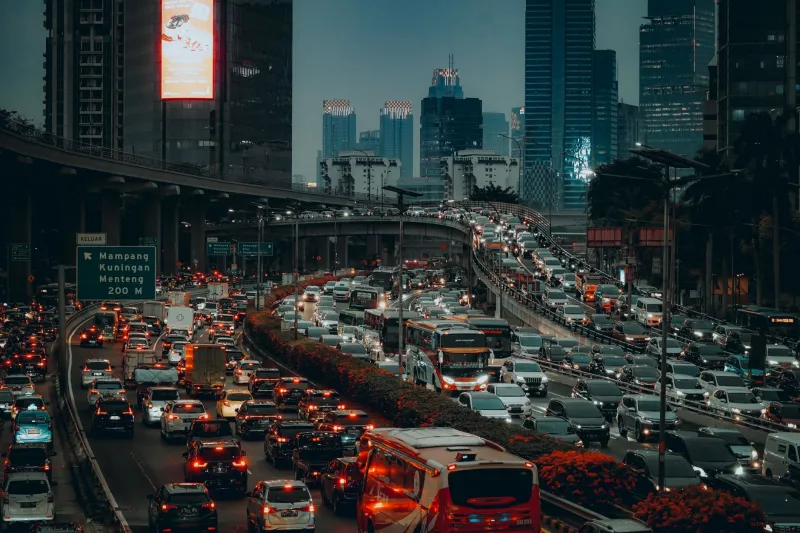
Then there is the traffic. Bekasi's congestion is not the kind that clears by mid-morning. It is dense, stop-and-start movement that persists through most of the day, generating the kind of thermal cycling in engines and transmissions that engineers refer to as one of the most destructive operational patterns a drivetrain can experience. Vehicles idle. They surge. They idle again. Coolant temperatures fluctuate. Transmission fluid heats and cools in rapid succession. Over thousands of cycles, weaknesses that would take years to surface under normal driving conditions reveal themselves in months.
Why This Matters More Than Manufacturer Testing Protocols
Manufacturer test programs are rigorous by design. Engineers subject vehicles to salt spray, extreme cold chambers, high-altitude routes, and dynamometer simulations of high-speed stress. These protocols catch a wide range of engineering flaws before production begins.
What they cannot do is replicate the unpredictability of real-world use at scale. A test driver knows the pothole is coming. A Bekasi commuter does not. A climate chamber runs for a defined cycle. Bekasi's humidity runs continuously, every hour of every day, for the entire ownership life of the vehicle. A test track simulates stop-and-go traffic. Bekasi delivers it with the randomness and duration that only a living city can produce.
The result is that vehicles operating in Bekasi accumulate a kind of stress biography that no manufacturer facility can write. Components that hold up under that biography have been validated in a way that transcends laboratory certification. Components that fail reveal vulnerabilities that engineers can address in subsequent production cycles — improvements that eventually reach vehicles sold on the other side of the world, including in the United States.
The Feedback Loop American Owners Benefit From Without Knowing It
Toyota's global production and quality feedback systems mean that field data from markets like Indonesia flows back into engineering and manufacturing decisions. When a specific seal compound shows premature degradation under Bekasi's humidity, that information informs material specifications. When a suspension geometry develops a pattern of accelerated wear under the city's road conditions, that pattern influences design refinements.
American Toyota owners are downstream beneficiaries of this process. The Camry or Tacoma sitting in a dealership lot in Phoenix or Cincinnati carries within its engineering the accumulated lessons of markets where conditions are far less forgiving than anything most American drivers will encounter. That is not marketing language. It is the straightforward logic of how global vehicle development works when a manufacturer takes field data seriously.
At Pusat Toyota Bekasi, our service technicians contribute to this ecosystem directly. The diagnostic patterns we observe, the components we replace, and the failure modes we document all feed into a larger picture of how these vehicles perform under genuine duress. It is one reason we take maintenance documentation as seriously as we do — a well-maintained service record from a high-stress market like Bekasi carries informational weight that a record from a more forgiving environment simply cannot match.
What American Drivers Can Take From the Bekasi Standard
For American Toyota owners, the practical takeaway is this: the vehicle you drive has already been stress-tested by proxy in one of the world's most demanding urban environments. That is an advantage worth preserving through disciplined maintenance.
Bekasi's conditions expose neglect quickly. An American driver who defers an oil change by a few thousand miles may not notice immediate consequences in a mild climate. In Bekasi, that same deferral can produce measurable engine wear within weeks. The vehicle's engineering tolerates the stress because it was designed with that environment in mind — but only when maintenance keeps pace with the demands being placed on it.
The lesson is not that American driving conditions are easy. Urban heat in cities like Phoenix, Houston, and Miami creates real thermal stress. Potholed roads in the Northeast generate real suspension wear. Stop-and-go commutes in Los Angeles produce real transmission heat cycles. The lesson is that Toyota's engineering accounts for all of this and more, because it was validated somewhere that combines all of those stressors simultaneously, every day, at a scale no test facility can match.
A City That Works So Your Vehicle Doesn't Have To Guess
Bekasi is not a place most American Toyota owners will ever visit. But in a meaningful sense, their vehicles already have. The durability standards embedded in every component, the material choices made at the engineering level, the quality thresholds that define what leaves the production line — all of it has been shaped by real-world performance data from markets where failure is not a theoretical risk but a daily possibility.
At Pusat Toyota Bekasi, we take quiet pride in that connection. The vehicles we service, the customers we advise, and the maintenance culture we represent are part of a global reliability story that reaches further than most people realize. When an American driver puts 200,000 miles on a Toyota without a major mechanical failure, Bekasi had something to do with it — even if no one ever told them so.