What American Dealerships Could Learn From a Toyota Loyalty Program Built in Bekasi
Photo: Greg Gjerdingen from Willmar, USA, CC BY 2.0, via Wikimedia Commons
The American car dealership has a reputation problem. Surveys consistently rank car salespeople among the least trusted professionals in the United States, and the dealership experience — with its pressure-laden finance offices, opaque pricing, and service departments that seem designed to confuse — reinforces that perception at every touchpoint. For an industry that depends on repeat customers and word-of-mouth referrals, the gap between the experience dealers deliver and the experience customers want remains stubbornly wide.
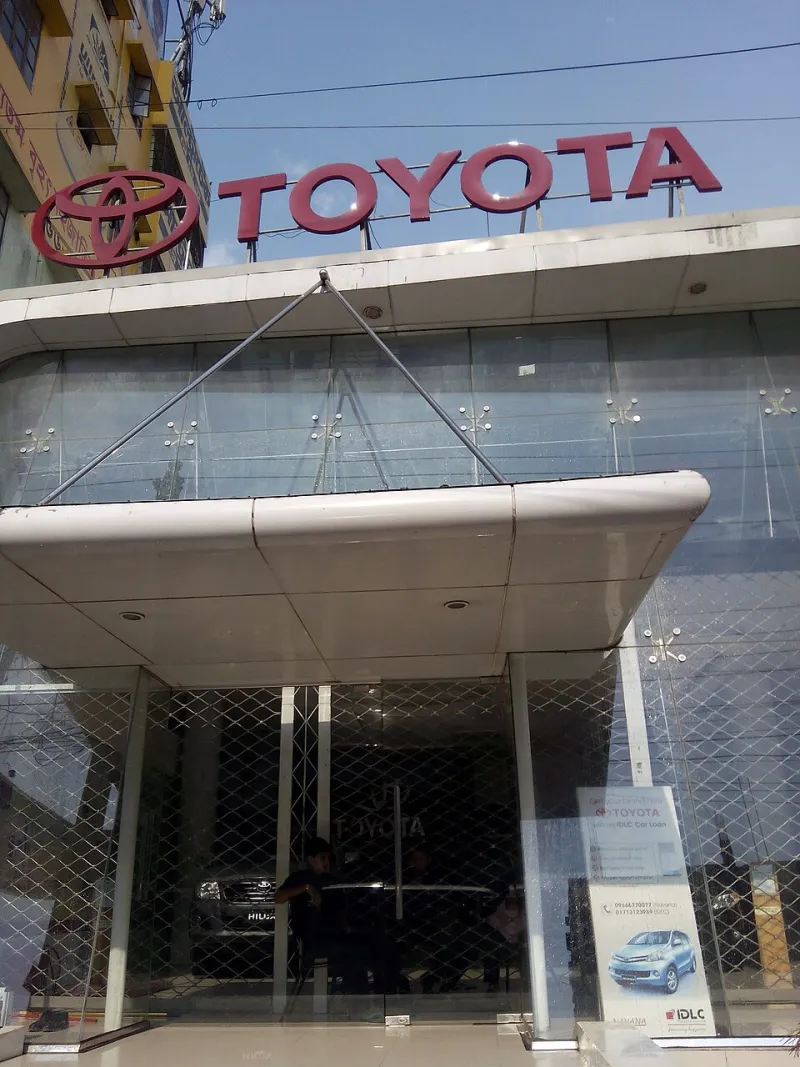
In Bekasi, Indonesia, a mid-sized city east of Jakarta with a population of roughly three million people, Pusat Toyota Bekasi has built a customer retention model that operates on entirely different assumptions. The dealership's approach — shaped by local economic realities, cultural expectations, and a genuine understanding of what keeps working-class and middle-income families loyal — offers a blueprint that American dealers would benefit from studying carefully.
The Foundation: Personalized Service Records as a Trust Mechanism
At Pusat Toyota Bekasi, every vehicle that enters the service lane is tied to a detailed, longitudinal service record that belongs to the customer — not just to the dealership's internal database. Service advisors review prior visit notes before a customer reaches the service counter, allowing them to greet returning clients with context: "Your air filter was borderline at your last visit — would you like us to check it again today?" or "We noticed a minor brake pad measurement six months ago; here is where it stands now."
This is not a sophisticated technological achievement. It is a discipline of documentation and communication that prioritizes the customer's sense of being known over the dealership's operational efficiency. In American dealerships, service records frequently exist in fragmented systems that advisors rarely consult before a customer arrives. The result is that even loyal, long-term customers feel like strangers at every visit — a dynamic that erodes trust without anyone explicitly intending it.
The Bekasi model treats the service record as a relationship document, not merely a billing artifact. When customers feel that a service provider genuinely tracks and remembers their vehicle's history, the psychological cost of switching to a competitor rises substantially. That retention effect is not accidental — it is engineered.
Transparent Pricing as a Competitive Differentiator
One of the most consistent complaints American car buyers raise about dealerships involves pricing opacity — service estimates that balloon unexpectedly, add-on charges that appear without prior discussion, and a general sense that the final invoice reflects negotiation rather than honest valuation. This dynamic is so normalized in the US market that many customers simply accept it as the cost of doing business.
Pusat Toyota Bekasi operates under a different standard, driven partly by the competitive intensity of the Indonesian market and partly by a customer base that has limited tolerance for financial surprises. Service packages at the dealership are structured with fixed, publicly communicated pricing that covers labor, parts, and any applicable fees without hidden line items. When unexpected repair needs arise during a service visit, the protocol requires advisor approval from the customer before any work proceeds — not as a legal formality, but as a genuine consultation.
The commercial logic behind this approach is straightforward: in a market where customers talk to each other extensively — through neighborhood networks, social media, and community groups — a single instance of pricing dishonesty can generate reputational damage that no advertising budget can fully repair. American dealerships, insulated by geographic monopolies and brand lock-in, have historically faced fewer immediate consequences for opacity. But as online review platforms give customers unprecedented amplification, that insulation is thinning.
Maintenance Packages Calibrated to Real-World Budgets
In Bekasi, vehicle ownership represents a significant financial commitment for many families. The decision to purchase a Toyota is often made over months of planning, and the ongoing cost of maintenance factors directly into whether that ownership experience remains sustainable. Pusat Toyota Bekasi has responded to this reality by developing tiered maintenance packages that allow customers to budget predictably across a full ownership year.
Rather than presenting each service visit as an individual transaction — with variable costs that customers cannot anticipate — the dealership offers annual service bundles that cover scheduled maintenance at fixed intervals for a pre-agreed price. Customers who enroll in these packages demonstrate measurably higher service retention rates than walk-in customers, and they report significantly higher satisfaction with the ownership experience overall.
The parallel in the American market would be a genuine prepaid maintenance program with transparent, fixed pricing — not the opaque, high-margin "protection packages" that American finance offices frequently bundle into new vehicle purchases without adequate explanation. The distinction matters: one model is designed around the customer's financial planning needs, the other around the dealership's revenue optimization. Customers can tell the difference, even when they cannot articulate exactly why.
Community Engagement as a Loyalty Multiplier
Pusat Toyota Bekasi's approach to community engagement extends well beyond the conventional dealership sponsorship model. Rather than simply attaching the dealership's name to local events as a branding exercise, the dealership actively participates in local driver education initiatives, vehicle care workshops open to the public, and partnerships with community organizations that serve the broader Bekasi population.
These activities serve a dual purpose. They generate genuine goodwill among residents who may not yet be customers, and they reinforce the dealership's identity as a community institution rather than a commercial transaction point. In a market where personal relationships and community reputation carry substantial weight in purchase decisions, this positioning translates directly into showroom traffic and service lane volume.
American dealerships have the infrastructure and resources to pursue similar strategies, but the organizational culture of most US dealerships — oriented around monthly sales targets and quarterly financial metrics — rarely creates space for the kind of long-term, relationship-first investment that community engagement requires. The Bekasi model suggests that dealerships willing to accept a longer return horizon on community investment ultimately build more durable customer bases.
The Structural Lesson for American Retailers
What distinguishes Pusat Toyota Bekasi's loyalty approach from the loyalty programs that American dealerships typically deploy is a matter of intent. American dealership loyalty programs are predominantly designed to generate repeat transactions. The Bekasi model is designed to generate trust — and then allows trust to generate transactions organically.
That inversion has practical implications for every element of dealership operations, from how service advisors are trained and compensated to how pricing is communicated, how records are maintained, and how the dealership positions itself within the broader community. None of these changes require proprietary technology or exceptional capital investment. They require a genuine organizational commitment to the customer's experience as the primary metric of success.
As American consumers grow increasingly skeptical of traditional dealership practices — and as direct-to-consumer automotive retail models gain traction — the dealerships that survive and thrive will be those that find ways to build the kind of trust that Pusat Toyota Bekasi has built in Bekasi. The blueprint already exists. The question is whether American dealers are willing to study it seriously.