Monsoon-Proof Brakes: What Bekasi's Extreme Stopping Standards Reveal About Toyota Brake Failures Americans Never See Coming
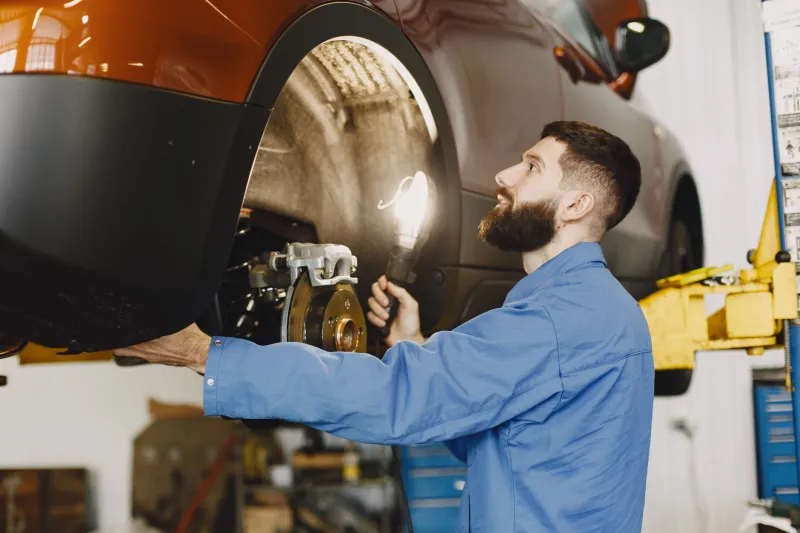
For most American Toyota owners, a brake inspection follows a familiar rhythm: a technician glances at pad thickness during an oil change, declares the system acceptable, and sends the vehicle back onto the road. It is a process calibrated for convenience rather than depth. In Bekasi, Indonesia, that approach would be considered dangerously incomplete.
At Pusat Toyota Bekasi, brake evaluations are built around a different set of assumptions — ones shaped by monsoon flooding, volcanic dust, relentless stop-and-go congestion, and heat that rarely relents. The result is a diagnostic discipline that routinely surfaces brake defects that American inspection methods are simply not designed to catch. What those findings reveal about Toyota brake systems in general carries serious implications for drivers on the other side of the world.
Why Bekasi's Roads Demand More From Brakes Than Most American Cities Ever Will
The streets of Bekasi are not a controlled environment. During monsoon season, standing water regularly overtakes low-lying roads. Dust from construction and unpaved industrial routes infiltrates brake assemblies with unusual persistence. Temperatures regularly exceed 90 degrees Fahrenheit with humidity levels that accelerate corrosion in ways that American temperate climates simply do not replicate at the same rate.
The practical consequence of these conditions is that brake components in Bekasi age differently than they do in, say, suburban Chicago or Phoenix. Rotors corrode from the inside out. Brake dust mixed with moisture forms a compound that bonds to caliper slides, limiting their range of motion. Brake fluid absorbs atmospheric humidity faster than manufacturers' maintenance schedules typically anticipate, lowering its boiling point at precisely the moments when stopping power matters most.
Technicians here have learned to look for these failure signatures not because they read about them in a manual, but because they encounter them constantly. That experiential knowledge has produced a set of diagnostic benchmarks that treat the brake system as an integrated assembly under environmental stress — rather than a collection of individual parts with fixed replacement thresholds.
The Specific Defects That Tropical Brake Testing Exposes
When Bekasi technicians conduct a full brake evaluation, several failure patterns emerge with regularity that American service records rarely document with comparable frequency.
Caliper slide corrosion is among the most common. In humid climates, the metal pins that allow brake calipers to move freely become coated in a thin layer of oxidation that restricts their travel. The result is uneven pad wear — one side of the rotor receives consistent pressure while the other side operates with reduced contact. American inspections that measure only pad thickness often miss this entirely, because the pad on the well-functioning side may appear healthy even as the opposite side deteriorates at twice the expected rate.
Brake fluid moisture absorption is another defect that tropical conditions accelerate dramatically. Brake fluid is hygroscopic, meaning it naturally draws moisture from the surrounding environment over time. In high-humidity climates, this process happens faster than standard replacement intervals account for. Fluid with elevated moisture content has a significantly lower boiling point, which means that under hard braking conditions — descending a long grade, emergency stopping on a highway — the fluid can vaporize, creating air pockets in the brake lines that dramatically reduce pedal firmness. This phenomenon, known as vapor lock, is not theoretical. Bekasi technicians have documented it in vehicles that American service records would classify as well-maintained.
Dust infiltration into brake pad backing plates is a third failure mode that receives little attention in American service literature. Fine particulate matter — especially the kind common around construction zones and unpaved roads — works its way behind the brake pad and between the pad and the caliper bracket. Over time, it creates pressure points that cause the pad to wear at an angle rather than evenly across its surface. The result is reduced stopping power that develops gradually, making it easy for drivers to normalize the change in brake feel before it becomes a recognized safety concern.
What American Toyota Owners Should Take From This
The conditions in Bekasi are extreme, but they are not entirely alien to American driving environments. Coastal Toyota owners in Florida, Louisiana, and the Pacific Northwest encounter humidity levels that approach tropical thresholds. Drivers in the Southwest deal with fine particulate dust that infiltrates brake assemblies in ways comparable to Bekasi's construction zones. And any Toyota owner who has driven through a flooded intersection, a salted winter road, or a summer rainstorm has introduced moisture into a brake system that may not be evaluated at the frequency such exposure warrants.
The lesson from Bekasi is not that American brake systems are universally deficient. It is that standard American inspection protocols were designed around average conditions — and average conditions are not what brakes actually encounter. The gap between what a typical service checklist measures and what is actually happening inside a brake assembly can be significant, and in a safety-critical system, significant gaps carry real consequences.
Specifically, American Toyota owners would benefit from requesting the following evaluations that Bekasi-standard inspections routinely include:
- Caliper slide pin inspection and lubrication, not merely a visual check of pad thickness
- Brake fluid moisture content testing using a refractometer or test strips, with replacement triggered by moisture percentage rather than mileage alone
- Rotor lateral runout measurement, which detects warping that causes pedal pulsation long before it becomes severe enough to feel clearly
- Brake dust and debris inspection behind pad backing plates, particularly for vehicles driven in dusty or unpaved conditions
None of these evaluations require specialized equipment beyond what any competent shop should already possess. What they require is the diagnostic philosophy that Bekasi's roads have made non-negotiable: treating the brake system as a dynamic assembly subject to environmental degradation, rather than a set of components with fixed lifespans.
The Cost of Waiting for Obvious Symptoms
American automotive culture has developed a strong tendency to defer maintenance until symptoms become undeniable. Brakes are particularly vulnerable to this pattern because their degradation is often gradual. Stopping distances increase by fractions. Pedal feel changes subtly. Noise appears intermittently before becoming constant. By the time a driver recognizes a clear problem, the system has often been operating in a compromised state for months.
In Bekasi, where brake failures in traffic can have immediate and severe consequences, technicians have learned to identify the early indicators rather than wait for the obvious ones. That discipline — the willingness to look deeper than a surface measurement and to treat environmental context as relevant diagnostic data — is what separates a safety-first brake inspection from a liability-minimizing one.
For American Toyota owners, the practical takeaway is straightforward: the next time a technician tells you your brakes look fine, it is worth asking exactly what was measured, what was inspected, and whether the inspection accounted for how and where you actually drive. The answer to those questions will tell you more about your brake system's true condition than any mileage figure or pad thickness measurement ever could.
At Pusat Toyota Bekasi, we have built our service standards around the understanding that roads do not grade on a curve. Your brakes should not either.