How Bekasi's Heat Exposed a Transmission Fluid Flaw That Went Unnoticed in American Showrooms for Three Years
There is a particular kind of knowledge that only comes from operating machinery at its absolute limits. Bekasi, a dense industrial city on the eastern edge of greater Jakarta, provides exactly those conditions — relentless equatorial heat, stop-and-go traffic that would exhaust any powertrain, and road surfaces that punish every mechanical component with quiet consistency. It was in this environment that Toyota technicians at authorized service centers began noticing something unusual in a specific generation of automatic transmissions. What they documented would take American dealerships nearly three model years to acknowledge.
The story is not about negligence on anyone's part. It is about the fundamental difference between what a controlled test environment reveals and what real-world extremes expose.
The Discovery in the Service Bay
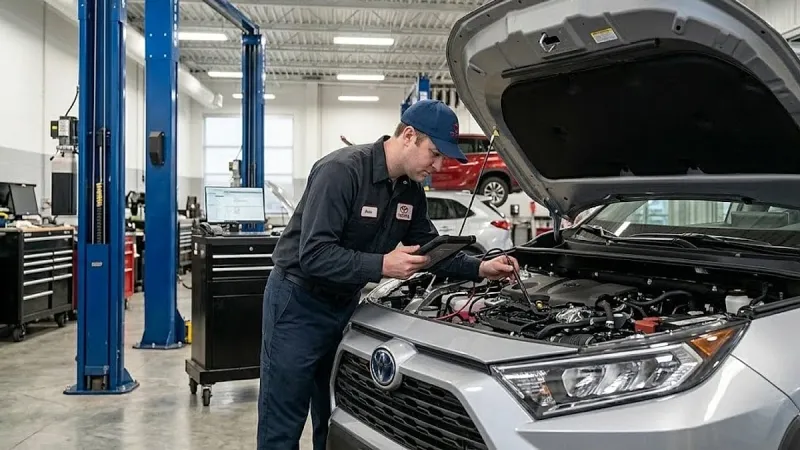
Around the mid-cycle of a popular Toyota sedan generation — one sold in both the Indonesian and North American markets — service advisors in Bekasi began logging a pattern. Vehicles with moderate mileage, typically between 40,000 and 65,000 kilometers, were presenting with sluggish gear transitions, subtle hesitation during upshifts, and in some cases, a faint shudder at highway cruising speeds. The symptoms were not dramatic. They did not trigger warning lights immediately, and in many instances, owners only noticed them after a technician pointed them out during a routine inspection.
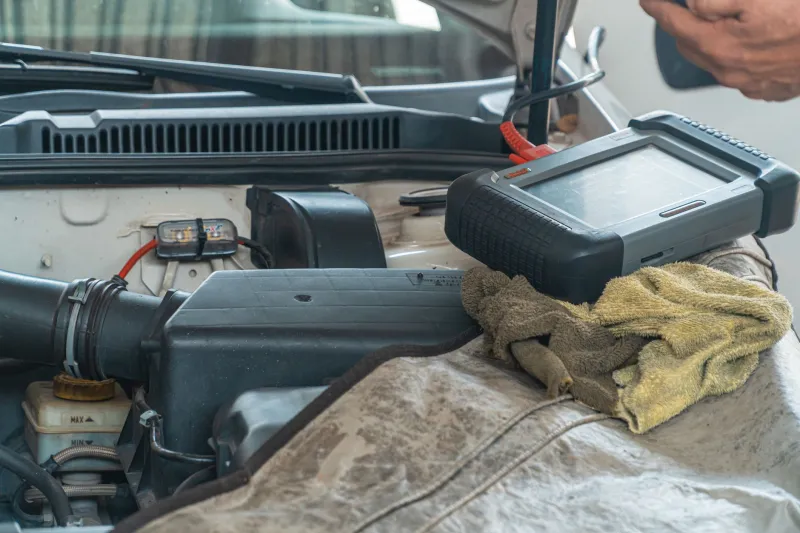
The culprit, after careful fluid sampling and laboratory analysis, was the automatic transmission fluid itself. Under Bekasi's operating conditions — ambient temperatures frequently exceeding 34°C (93°F), combined with extended idling in congested traffic — the factory-fill fluid was breaking down at a rate the original service interval simply had not anticipated. The fluid's viscosity index was degrading faster than the maintenance schedule assumed, leaving transmission components operating with inadequate lubrication during the precise moments they needed it most: low-speed, high-load maneuvering in urban heat.
Why American Conditions Hid the Same Problem
This is where the story becomes directly relevant to Toyota owners in the United States. The identical transmission hardware and the same factory-fill fluid specification were present in vehicles sold across North America. However, the American driving profile — lower average ambient temperatures, more consistent highway driving, and shorter urban congestion windows — meant the fluid was not reaching the thermal stress thresholds that exposed the weakness in Bekasi.
The degradation was still occurring. It was simply occurring more slowly. American owners were not experiencing the shudder or the hesitation because the fluid had not yet crossed the threshold where symptoms become perceptible. But the underlying chemistry was identical. Given enough time, enough summer heat in cities like Phoenix, Houston, or Miami, and enough stop-and-go commuting, the same degradation curve would eventually arrive at the same destination.
Bekasi's technicians, in effect, had run a long-term accelerated stress test on behalf of the global Toyota fleet. The Indonesian operating environment had compressed a three-year degradation timeline into something closer to eighteen months.
The Documentation That Made the Difference
What elevated this from an isolated service observation to a documented technical concern was the rigor with which Bekasi service centers recorded their findings. Authorized Toyota dealers in Indonesia maintain detailed service histories — fluid condition at each interval, mileage, operating patterns, and technician notes. When multiple service centers across Bekasi and the broader West Java region began logging the same anomaly within the same model generation and mileage range, the pattern became undeniable.
Those aggregated records were communicated through Toyota's regional technical channels. The feedback loop between Indonesian service operations and Toyota's engineering and quality assurance teams is more direct than many American owners might expect. Indonesia is one of Toyota's most significant markets globally, and the volume of vehicles serviced there generates a substantial body of real-world performance data.
The eventual outcome was a revised fluid specification and an updated service interval recommendation for the affected transmission. In some markets, this arrived as a technical service bulletin. In others, it came as a quiet update to the owner's manual supplement. In either form, it represented a correction that originated not in a laboratory or on a test track, but in the service bays of a city most American Toyota owners have never heard of.
What American Owners Should Take From This
If you own a Toyota from the affected generation — particularly a model purchased between the years the original fluid specification was in use — there are several practical steps worth considering.
First, do not rely solely on the original service interval for transmission fluid changes. The factory recommendation was established under testing conditions that did not fully account for high-ambient-temperature, high-load urban driving. If you live in a warm-climate city and your commute involves significant stop-and-go traffic, you are operating closer to Bekasi's conditions than the engineers assumed when they set that interval.
Second, request a fluid condition assessment at your next service appointment. A competent technician can evaluate color, viscosity, and odor to give you a meaningful read on whether your fluid has been working harder than the schedule anticipated. This is not an upsell — it is a diagnostic step with genuine value.
Third, if your vehicle has exhibited any of the symptoms described here — subtle gear hesitation, mild shudder at cruising speed, or a slight delay in low-speed upshifts — do not dismiss them as normal behavior. These are early indicators, and addressing them at the fluid level is far less costly than addressing them at the mechanical level.
The Broader Lesson for the American Toyota Community
The transmission fluid episode illustrates something that deserves wider recognition: the global Toyota fleet is not a uniform entity operating under uniform conditions. Vehicles sold in Southeast Asia, the Middle East, and parts of South America routinely face thermal and mechanical stresses that American driving rarely replicates. When those markets surface a problem, the data they generate is directly applicable to American owners — even if the timeline for the problem's emergence differs.
At Pusat Toyota Bekasi, the service philosophy has always been grounded in what the roads and the climate actually demand, rather than what a maintenance schedule printed in a temperate-climate market assumes. That philosophy, shaped by years of servicing vehicles in some of the world's most demanding urban conditions, occasionally produces insights that travel much farther than Bekasi itself.
For American Toyota owners, the practical takeaway is straightforward: pay attention to what Indonesian service records are revealing, because those revelations have a habit of becoming your reality a few years down the road.