Stop-and-Go Streets, Serious Signals: How Bekasi Mechanics Catch Transmission Wear Before American Diagnostics Even Begin
There is a particular kind of intelligence that comes from working on vehicles in a city where traffic rarely moves faster than fifteen miles per hour. Bekasi, a densely populated urban center just east of Jakarta, subjects every Toyota on its roads to a relentless cycle of acceleration, braking, and near-standstill idling — sometimes for hours at a stretch. That environment has quietly trained a generation of Toyota technicians to read transmission behavior in ways that computerized diagnostics in American service bays simply cannot replicate.
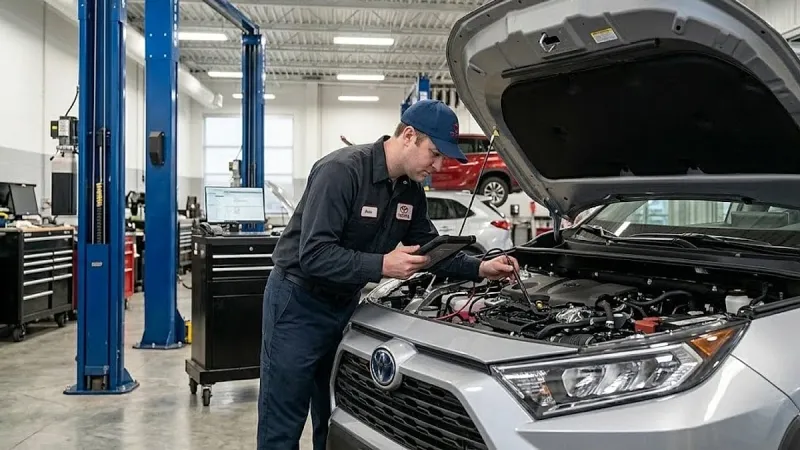
At Pusat Toyota Bekasi, our certified technicians encounter transmission issues on a daily basis that many American shops would not flag until a customer reports a hard shift or, worse, a complete failure. The difference is not equipment. It is methodology — and understanding that difference could save American Toyota owners thousands of dollars.
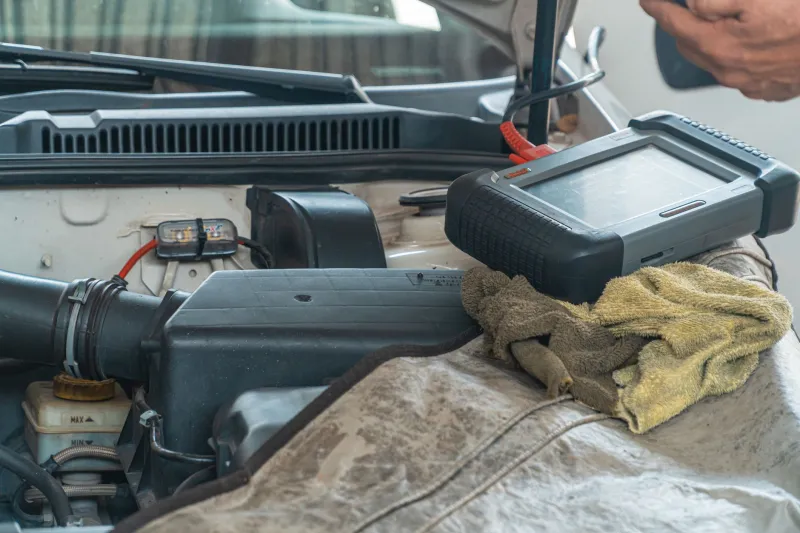
Why OBD-II Scanners Tell Only Half the Story
Modern On-Board Diagnostic systems are genuinely impressive tools. They monitor hundreds of parameters, store fault codes, and can alert a technician to sensor anomalies with remarkable precision. However, there is a fundamental limitation baked into their design: OBD-II systems are largely reactive. They record problems that have already crossed a measurable threshold. Early-stage transmission wear — the kind that develops gradually over thousands of miles of stop-and-go driving — often produces no fault code at all until the damage is well advanced.
Consider what happens to a Toyota automatic transmission during a typical Bekasi commute. The torque converter locks and unlocks dozens of times per mile. The valve body cycles through pressure adjustments constantly. The clutch packs engage under partial throttle far more frequently than they would on a highway. This repetitive, low-speed stress creates a very specific wear signature in the transmission fluid and in the mechanical behavior of the unit — one that a skilled technician can detect through direct observation and fluid analysis long before any sensor triggers a code.
American driving patterns, by contrast, often involve longer highway stretches, fewer full stops per mile, and less sustained low-speed torque demand. As a result, American service intervals and diagnostic routines were not specifically calibrated to catch the kind of incremental wear that urban grid-lock accelerates. The scanner comes out, reads clean, and the vehicle is returned to service — sometimes carrying a transmission problem that will surface dramatically six months later.
The Bekasi Technician's Four-Point Manual Assessment
At Pusat Toyota Bekasi, when a vehicle comes in with any drivetrain concern — or even as part of a routine service — our technicians apply a structured manual assessment that runs parallel to, not instead of, electronic diagnostics.
Fluid color and viscosity check. Transmission fluid tells a story that no sensor captures in real time. Fresh Toyota Genuine ATF should present as a clear, bright red liquid with a specific viscosity profile. Fluid that has been subjected to repeated heat cycling in slow traffic tends to darken and thin at an accelerated rate. Our technicians compare fluid condition against the vehicle's documented service history. A mismatch between mileage and fluid degradation is an immediate flag.
Low-speed engagement feel. The technician drives the vehicle in a controlled pattern that mimics Bekasi traffic conditions — repeated low-speed acceleration from a standstill, deliberate partial-throttle upshifts, and extended idle periods. They are listening and feeling for micro-hesitations during 1-2 and 2-3 shifts, subtle shudder at torque converter lockup, and any variation in engagement firmness between a cold start and a fully warmed drivetrain. These sensations are often imperceptible to a driver who has adapted to their own vehicle over time.
Pressure response under load. By applying moderate throttle from a standstill on a slight incline — a situation Bekasi's roads provide in abundance — the technician evaluates how the transmission builds and holds line pressure under real torque demand. Soft engagement or a momentary slip under this specific condition is one of the earliest indicators of clutch pack wear, and it produces no fault code.
Fluid quantity cross-check. Overfilling or underfilling a transmission by even a small margin affects shift quality and accelerates internal wear. American quick-service shops sometimes overlook this step during fluid top-offs. Our technicians verify quantity precisely, because an incorrect fluid level can mimic early mechanical wear and lead to misdiagnosis.
What American Toyota Owners Should Watch For
You do not need to be a trained technician to recognize early transmission warning signs. The challenge is that many American drivers have become accustomed to their Toyota performing so reliably that subtle changes go unregistered until they become undeniable.
Pay attention during your first few minutes of driving after the vehicle has sat overnight. A slight delay between selecting Drive and feeling the transmission fully engage is worth noting, especially if that delay is longer than it was a year ago. A faint shudder at highway speeds — particularly when the torque converter is cycling in and out of lockup on a gentle incline — is another signal that deserves professional attention rather than dismissal.
If your Toyota has spent significant time in urban traffic — think daily commuting in cities like Los Angeles, Houston, or Atlanta where stop-and-go congestion is routine — your transmission has experienced more cumulative stress than its mileage alone would suggest. This is precisely the scenario where Bekasi-style manual assessment provides value that a standard scan cannot.
The Case for Proactive Diagnosis
American automotive culture tends to reward efficiency. Service visits are short, diagnostics are quick, and the expectation is that if the check-engine light is off, the vehicle is healthy. That assumption works reasonably well for engines and emissions systems, where OBD-II coverage is comprehensive. It is less reliable for transmissions, where the gap between "no fault code" and "catastrophic failure" can be surprisingly narrow.
The technicians at Pusat Toyota Bekasi did not develop their manual diagnostic approach because they distrust technology. They developed it because Bekasi's streets taught them, vehicle after vehicle, that the earliest signs of transmission wear speak in a language that sensors are not yet fluent in. Fluid condition, engagement feel, pressure response under load — these are analog signals from a mechanical system, and they reward technicians who have learned to listen carefully.
For American Toyota owners, the practical takeaway is straightforward: request a transmission fluid inspection and a brief manual assessment at your next service visit, particularly if your vehicle has exceeded 40,000 miles in predominantly urban conditions. Ask your technician to drive the vehicle and describe what they feel during low-speed engagement, not just what the scanner reports.
Your Toyota was built to last. Catching the quiet signals early is what ensures it does.
Pusat Toyota Bekasi is an authorized Toyota dealership serving the greater Bekasi region. Our certified technicians combine manufacturer-standard diagnostic tools with field-tested manual assessment techniques developed through years of service in one of Southeast Asia's most demanding urban driving environments.