Parts Shelves Tell a Story: How Bekasi's Toyota Inventory Exposes the Hidden Logic of Global Auto Supply Chains
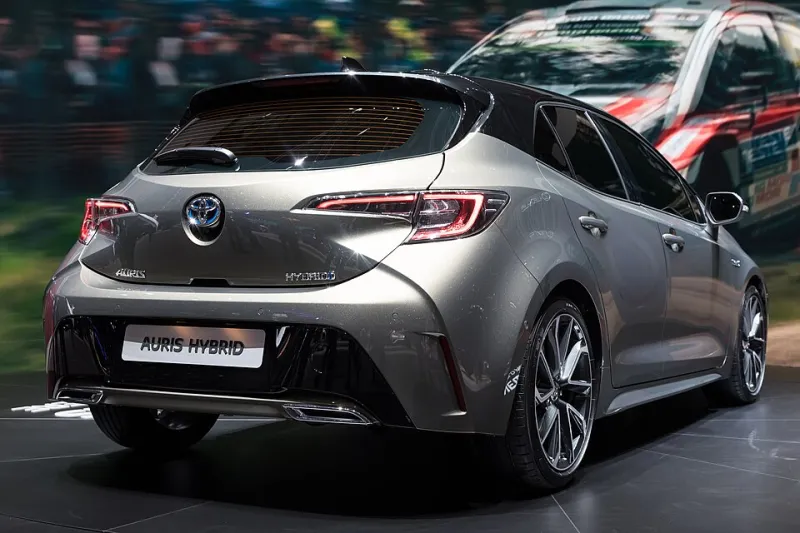
Photo: Matti Blume, CC BY-SA 4.0, via Wikimedia Commons
Walk into the parts warehouse at Pusat Toyota Bekasi and you will find a stocklist that looks nothing like what you would encounter at a dealership in Ohio or Texas. The differences are not accidental — they are a masterclass in climate-driven demand, regional regulation, and supply chain resilience that American dealers are only beginning to understand.
For most American consumers, the supply chain is invisible until it breaks. The pandemic-era chip shortage and the subsequent new-vehicle inventory collapse were jarring precisely because buyers had never been asked to think about where parts come from. In Bekasi — a sprawling industrial city just east of Jakarta, Indonesia — supply chain awareness has always been a daily operating reality.
The Climate Factor: Why the Same Car Needs Different Parts
Bekasi sits in a tropical zone where temperatures rarely dip below 75°F and relative humidity frequently exceeds 85 percent. That environmental reality reshapes which components fail first, how quickly they degrade, and therefore which replacement parts a responsible dealer must keep in constant stock.
At Pusat Toyota Bekasi, technicians routinely prioritize inventory categories that American dealers treat as slow-moving specialty items. Serpentine belts, radiator hoses, and cabin air filters turn over at significantly higher rates because heat and moisture accelerate material fatigue in ways that temperate climates simply do not replicate. Rubber compounds that last 60,000 miles in Minneapolis may show meaningful deterioration at 35,000 miles in Bekasi's heat and humidity.
This is not a manufacturing defect — it is physics. And it means that a dealership operating in Southeast Asia must build its parts inventory around a fundamentally different failure timeline than its American counterpart.
Beyond rubber and filtration components, corrosion-related parts — including undercarriage fasteners, brake hardware kits, and exhaust system components — are stocked in substantially larger quantities at Bekasi than at comparable-volume US dealerships. Salt air from the nearby Java Sea compounds the humidity problem, making oxidation an accelerated concern even on relatively new vehicles.
Import Regulations and the Localization Imperative
Indonesia's automotive import regulations add another layer of complexity that has no direct parallel in the American market. Indonesia imposes significant tariffs on fully assembled vehicles and certain imported components, which has historically pushed Toyota — like most major manufacturers operating in the country — toward local and regional sourcing wherever possible.
For Pusat Toyota Bekasi, this means that a meaningful portion of the parts inventory originates from Toyota's regional manufacturing network rather than being shipped directly from Japan or the United States. Components produced at Toyota's Karawang assembly plant and through affiliated regional suppliers form the backbone of the dealership's day-to-day stock.
This localization strategy creates a supply chain that is, in many respects, more resilient to global disruption than the highly centralized model that many American dealers depend upon. When a shipping bottleneck at a major Pacific port slows imports, a dealership with strong regional sourcing relationships is insulated in ways that a purely import-dependent operation is not.
American dealers learned this lesson painfully during the supply disruptions of 2021 and 2022. Dealerships in Bekasi had already internalized it years earlier, not by choice but by necessity.
Regional Demand Patterns and the Art of Predictive Stocking
Beyond climate and regulation, pure demand patterns shape the Bekasi inventory in ways that reveal important truths about how localized customer behavior should inform parts planning.
The Toyota Kijang Innova and the Toyota Avanza are among the highest-volume vehicles in the Bekasi market — people carriers and multi-purpose vehicles that suit Indonesian family sizes and road conditions. The parts ecosystem around these vehicles is deep and detailed at Pusat Toyota Bekasi, with suspension components, drivetrain wear items, and body panels stocked at levels that reflect real-world turnover rates.
In contrast, an American dealer in a comparable-size market might stock deeply for F-Series truck competitors, SUVs, and sedans that have almost no presence in the Bekasi market. Neither approach is wrong — both reflect rational responses to actual customer demand. But the discipline of matching inventory depth to local usage patterns is something the Bekasi operation has refined over years of operating in a market where over-ordering ties up capital and under-ordering destroys customer trust.
For American dealers who have historically relied on manufacturer-managed inventory programs to make stocking decisions for them, the Bekasi model offers a different philosophy: treat your parts warehouse as a direct expression of your customers' specific driving realities, not as a generic fulfillment center.
What American Dealers Can Actually Take Away
The operational gap between Bekasi and, say, a Toyota dealer in suburban Atlanta is wide — but the underlying principles are transferable.
First, climate segmentation matters. American dealers in Phoenix, Miami, and Houston operate in heat-and-humidity conditions that are meaningfully different from dealers in Seattle or Chicago. Parts failure timelines differ across those markets, yet many dealer groups apply uniform inventory logic across their entire network. Bekasi's experience suggests that climate-informed stocking is not a luxury — it is a competitive advantage in customer satisfaction and repair turnaround time.
Second, supply chain diversification is a strategic asset. American dealers that have invested in relationships with regional distributors and aftermarket-compatible OEM suppliers have fared better during disruption events than those dependent on a single sourcing channel. Bekasi's forced diversification through regulatory pressure inadvertently produced a more robust supply posture.
Third, demand-driven inventory depth — rather than manufacturer-suggested generic stocking — produces better outcomes for both dealers and customers. Knowing which models your specific customer base actually drives hard, and in what conditions, is knowledge worth translating directly into parts planning.
At Pusat Toyota Bekasi, the parts warehouse is not an afterthought. It is, in many ways, the clearest expression of what it means to serve a specific community of drivers rather than a generic market demographic. That philosophy, translated thoughtfully, has something meaningful to offer the American auto retail landscape.