From Bekasi's Roads to Your Driveway: How Feedback From Indonesian Toyota Drivers Is Shaping the Cars Americans Will Buy Tomorrow
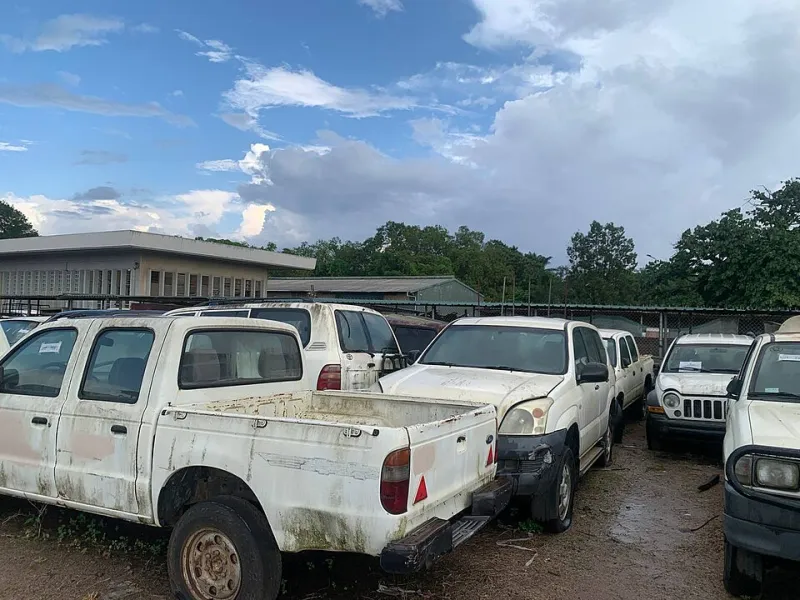
Photo: Edammy, CC0, via Wikimedia Commons
Most American Toyota owners have never heard of Bekasi, yet the engineers who built their vehicles almost certainly have. The punishing roads, extreme heat, and high-humidity conditions that Indonesian drivers navigate every day have quietly become one of Toyota's most valuable real-world proving grounds — and the lessons learned there are already embedded in the cars sold across the United States.
This is the story of how a dealership and a customer base operating in one of Southeast Asia's most demanding automotive environments feed insights upward through Toyota's global development network — and why American drivers are the quiet beneficiaries.
The Road as a Laboratory
Bekasi's road network is not kind to vehicles. A combination of dense urban traffic, unpaved secondary roads, severe heat cycles, and seasonal flooding creates conditions that stress-test every mechanical and electrical system in ways that a controlled proving ground simply cannot replicate.
At Pusat Toyota Bekasi, service technicians accumulate detailed, real-world failure data across thousands of vehicles per year. Suspension geometry issues that develop under specific load conditions, cooling system behaviors under prolonged low-speed urban operation, transmission wear patterns unique to stop-and-go traffic in extreme heat — all of this becomes part of a feedback loop that flows, through Toyota's regional and global service networks, back toward engineering and product planning teams.
This is not informal. Toyota has long operated regional technical centers and maintains structured feedback mechanisms through its dealer networks in high-volume markets. Indonesia, as one of Toyota's most significant Southeast Asian markets, carries meaningful weight in that system.
Heat as an Accelerant for Engineering Insight
One of the most direct ways that the Bekasi operating environment influences global Toyota engineering is through thermal management. Ambient temperatures in the Bekasi area regularly exceed 95°F, and vehicles sitting in traffic for extended periods — a daily reality for many Indonesian commuters — generate sustained thermal stress on engines, transmissions, and cooling systems that few other markets produce at scale.
When a specific component shows early failure patterns across a statistically significant number of vehicles in a market like Bekasi, Toyota's engineering teams pay attention. Cooling system improvements, revised thermostat calibrations, and enhanced heat shielding on exhaust and drivetrain components have all, at various points, been informed by durability data emerging from tropical markets.
For American drivers in states like Florida, Louisiana, and Arizona — where summer heat pushes vehicles toward similar thermal extremes — these improvements translate directly into longer component life and fewer unexpected repair events. The engineering refinement happened because Bekasi's roads exposed the weakness first.
Customer Pain Points as Product Development Signals
Beyond mechanical durability, the preferences and frustrations of Indonesian Toyota drivers have influenced cabin design and feature prioritization in ways that ripple outward to global markets.
Indonesian buyers, particularly in urban markets like Bekasi, place exceptional importance on cabin cooling efficiency. The expectation that a vehicle's air conditioning system should reach a comfortable interior temperature quickly — even after sitting in direct sun for hours — is a non-negotiable for customers in this market. Toyota's response to that demand has driven HVAC system improvements and solar-reflective glass specifications that now appear across multiple global model lines.
Similarly, the multi-passenger utility that Indonesian families require from vehicles like the Toyota Kijang Innova has pushed Toyota toward interior packaging solutions — flexible seating configurations, optimized third-row access, improved cargo integration — that have found their way into the design language of people-movers and SUVs sold in markets worldwide, including the United States.
The Toyota Sienna's evolution toward greater interior versatility, for example, reflects influence from markets where multi-row passenger vehicles are genuinely worked hard on a daily basis, not simply used for occasional family road trips.
Durability Testing That No Engineer Can Replicate on a Track
There is a category of vehicle stress that controlled testing environments struggle to simulate: the cumulative, unpredictable punishment of real-world use in a demanding market over hundreds of thousands of collective miles.
When Pusat Toyota Bekasi processes a high volume of vehicles through its service bays, patterns emerge. A specific seal that degrades unusually quickly under tropical humidity. A suspension bushing that fatigues faster under the particular frequency of urban road vibrations. An electrical connector that shows corrosion at an unexpected rate due to moisture ingress.
Each of these observations, when aggregated across a dealer network and reported through Toyota's service data systems, becomes an input into the next product revision cycle. The vehicle that American buyers purchase in 2026 will be quieter, more durable, and more thermally resilient in part because of what Bekasi's roads revealed about the 2022 model.
This is real-world durability validation at a scale and intensity that no test track can manufacture.
Why This Should Matter to American Toyota Owners
For American consumers accustomed to thinking of their Toyota as a purely domestic product decision — built to American specifications, tested on American roads — the Bekasi connection offers a useful reframe.
Every Toyota sold in the United States carries within it the accumulated engineering wisdom of a global network that includes some of the world's most demanding operating environments. The reliability that American owners have come to associate with the Toyota nameplate is not simply the product of Japanese engineering precision — it is the result of continuous feedback from markets like Indonesia, where failure consequences are immediate and real-world testing is constant and unforgiving.
At Pusat Toyota Bekasi, that process is visible every day. A technician documenting an unusual wear pattern, a service advisor relaying a customer complaint about heat performance, a parts manager noting an unexpected surge in demand for a specific component — all of it contributes, in ways both direct and indirect, to the ongoing refinement of vehicles that will eventually reach American driveways.
The next time you start your Camry on a scorching August afternoon and notice how quickly the cabin cools, or take a corner in your RAV4 and appreciate the composed suspension response, it is worth knowing that somewhere on a congested road in Bekasi, those qualities were earned.