Road-Tested in Bekasi: How One Indonesian City Quietly Shapes the Toyota You Drive in America
Photo: US Department of Labor, Public domain, via Wikimedia Commons
Bekasi is not a city that appears on most American mental maps. Located just east of Jakarta in West Java, it is home to more than three million people, some of Indonesia's most consequential industrial infrastructure, and traffic conditions that would reduce the average American commuter to despair within a single morning. It is also, quietly and without much fanfare, one of the most important real-world testing environments in the global Toyota ecosystem.
That claim requires some unpacking — because the story of how Bekasi influences the Toyota you drive in the United States is not told through press releases or product launch events. It is told through engineering decisions, reliability data, and the kind of hard-won mechanical knowledge that only emerges when vehicles are subjected to genuinely extreme conditions over millions of accumulated kilometers.
What Makes Bekasi's Conditions Exceptional
To understand why Bekasi matters as a proving ground, you first need to appreciate what its vehicles endure. The city sits in a tropical climate zone where ambient temperatures regularly exceed 33 degrees Celsius (91 degrees Fahrenheit), humidity hovers at 80 percent or above for most of the year, and rainfall during monsoon season can be sudden, torrential, and sustained.
The road environment compounds these atmospheric challenges. Bekasi's streets range from well-maintained arterials to potholed secondary roads that test suspension geometry in ways that no controlled proving track fully replicates. Traffic density means that vehicles frequently operate in low-speed, high-heat, stop-and-go conditions for extended periods — exactly the scenario that stress-tests cooling systems, transmission behavior, and engine management software most severely.
For a vehicle to survive and perform reliably in Bekasi, it must be genuinely robust. There is no margin for engineering that merely passes a laboratory threshold.
The Feedback Loop Between Bekasi and Toyota's Global Engineering
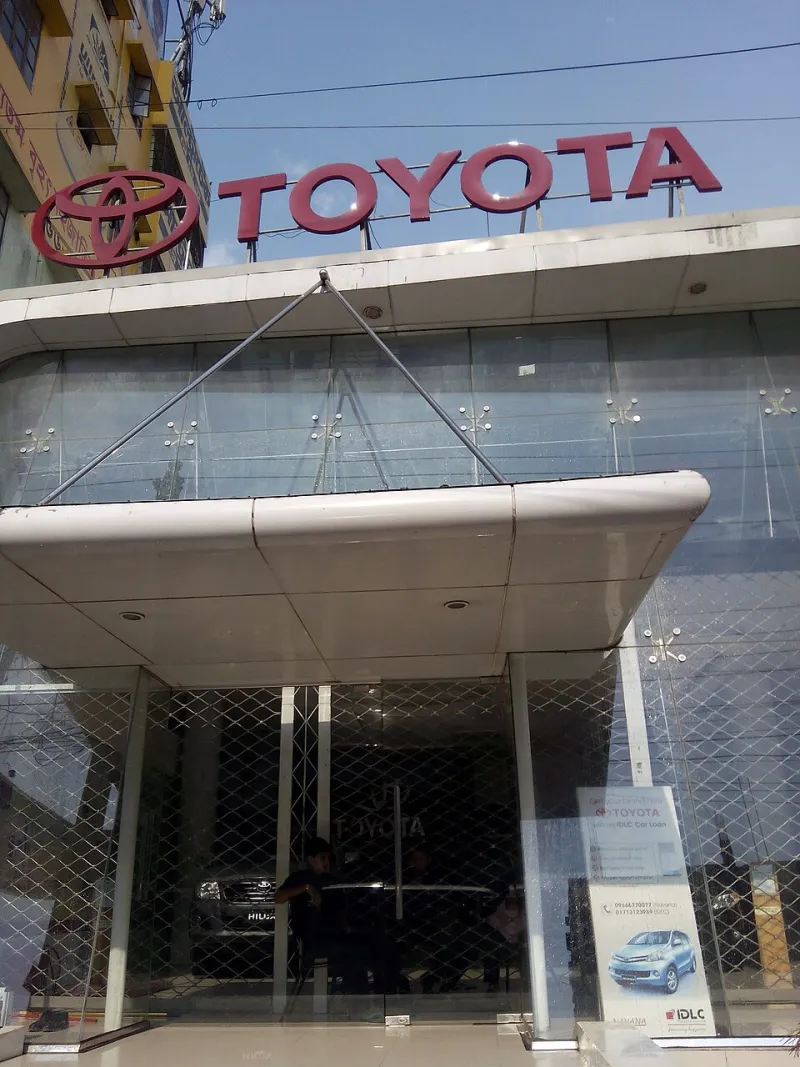
Pusat Toyota Bekasi, as a dealership operating in this environment, sits at the front line of a feedback system that runs directly back to Toyota's product development infrastructure. Service records, warranty claims, component failure patterns, and technician observations from dealerships like Pusat Toyota Bekasi contribute to the aggregate data that Toyota's engineering teams analyze when making decisions about component specifications, software calibration, and material selection.
This is not a theoretical process. Toyota has long operated on the principle that real-world fleet data from diverse global markets is more valuable than any simulated test environment. The Indonesian market, with its combination of extreme climate, demanding road surfaces, and high vehicle utilization rates, generates data that is particularly useful for identifying the boundaries of component durability.
When a specific transmission component shows elevated failure rates in Bekasi's stop-and-go traffic across multiple model years, that pattern does not stay in Indonesia. It enters Toyota's global quality management system, triggers engineering review, and can ultimately result in a specification change that propagates across all markets — including the United States.
Specific Systems Shaped by Emerging Market Demands
Several vehicle systems that American Toyota buyers now take for granted have lineages that trace, at least in part, to the demands of markets like Bekasi.
Thermal Management and Cooling Architecture Toyota's reputation for engine longevity in high-temperature environments did not emerge from testing in temperate California or the Midwest. It was earned in part through years of fleet performance in tropical markets where coolant systems, oil viscosity behavior, and thermal regulation are tested to their limits on a daily basis. Improvements to radiator capacity, thermostat calibration, and engine oil formulation recommendations in US-market Toyotas reflect lessons learned in environments like Bekasi.
Transmission Calibration for Urban Drive Cycles The smooth, responsive automatic transmission behavior that American drivers praise in current Toyota models has been refined through calibration data that includes dense urban drive cycles from markets like Indonesia. The low-speed torque management and heat dissipation characteristics of Toyota's automatic and CVT transmissions have been progressively optimized using real-world data from cities where stop-and-go driving is not an occasional inconvenience but a daily constant.
Corrosion Protection and Undercarriage Sealing Humidity-driven corrosion is a problem that Bekasi's climate makes impossible to ignore. The undercarriage sealing compounds, wiring harness protection standards, and anti-corrosion treatments applied to Toyota vehicles sold globally have been informed by failure analysis from tropical markets where inadequate protection becomes visible far more quickly than in dry or temperate climates. American drivers in coastal states and northern regions with road salt exposure benefit from these improvements without knowing their origin.
Infotainment and Connectivity Resilience As Toyota's in-vehicle technology has grown more sophisticated, the reliability of electronic systems under high-humidity and high-temperature conditions has become increasingly important. Feedback from markets like Indonesia — where heat and moisture stress circuit boards, connectors, and display components — has contributed to improved environmental sealing and thermal tolerance standards in Toyota's electronics architecture.
The Role of Dealerships in This System
It would be a mistake to view this process as purely a top-down engineering exercise. Dealerships like Pusat Toyota Bekasi play a genuinely active role in surfacing the field intelligence that drives these improvements. Technicians who observe recurring issues, service advisors who document customer complaints with precision, and parts managers who track component replacement patterns are all nodes in an information network that Toyota takes seriously.
This is one reason why Toyota's dealer relationships in high-stress markets are not simply transactional. The dealership is a data collection point. The quality of its service records and the attentiveness of its technical staff have a direct bearing on how useful its market's data is to Toyota's global engineering organization.
At Pusat Toyota Bekasi, the commitment to rigorous service documentation and genuine technical expertise is not merely a customer service philosophy — it is a contribution to a global quality improvement process that ultimately benefits Toyota owners everywhere.
What American Buyers Should Take From This
For the American Toyota customer, this story carries a few useful implications. The first is a reframing of what "global" means in the context of vehicle engineering. A Toyota sold in the United States is not solely a product of American market research and domestic proving grounds. It is the cumulative result of performance data gathered from some of the world's most demanding operating environments — including cities like Bekasi that most American buyers will never visit.
The second implication is about trust. When Toyota's engineers make a specification decision — a material upgrade, a calibration adjustment, a revised service interval — that decision is often grounded in failure data from markets where failures happen faster and more visibly than they do in the United States. The vehicle that results from that process has been, in a meaningful sense, pre-stressed and refined by conditions that American roads rarely impose.
The third is simply an invitation to look beyond the obvious. The automotive world is deeply interconnected in ways that marketing rarely acknowledges. The next time you appreciate the smoothness of a Toyota's transmission in city traffic, or notice that its engine runs cool on a hot summer afternoon, there is a reasonable chance that someone in Bekasi — a technician, a service advisor, a driver who has kept their car for fifteen years — played a small, unacknowledged role in making that possible.