After Dark Diagnostics: The Midnight Inspection Ritual That Catches What American Service Bays Overlook
Photo: Shixart1985, CC BY 2.0, via Wikimedia Commons
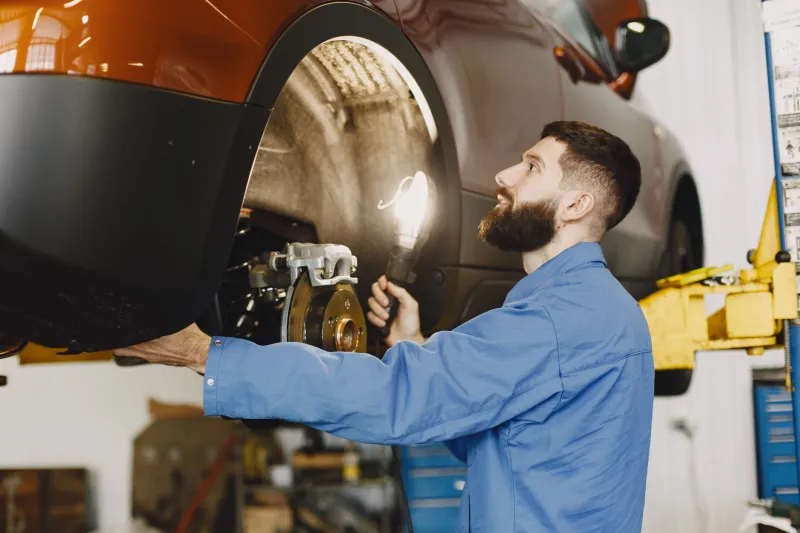
Walk past the service department at Pusat Toyota Bekasi after sundown and you'll notice something unusual: the bays are lit, the lift is humming, and a technician is crouched beside a Kijang Innova with a stethoscope-style listening rod pressed against the wheel hub. It is nearly midnight. This is not overtime. This is procedure.
Across much of the American dealership landscape, vehicle inspection is a daylight, business-hours affair — squeezed between oil change appointments, performed on a lift for twenty minutes, documented on a tablet, and moved along. Bekasi's service culture evolved differently, and the reasons why say a great deal about what gets missed in faster, louder environments.
Why the Middle of the Night Is the Right Time
Bekasi's daytime conditions are punishing: dense traffic, ambient temperatures that routinely push past 90°F, and a constant wall of sound from one of the busiest corridors in Southeast Asia. Under those circumstances, a worn wheel bearing, a failing idler pulley, or a hairline exhaust leak is masked by heat expansion and background noise.
After midnight, three things change at once:
- Metal contracts. As components cool, gaps in worn bearings, loose suspension bushings, and cracked belts open slightly. A knock that vanishes when the engine is heat-soaked becomes audible on a cold soak.
- The environment goes silent. With no compressor cycling, no neighboring bays grinding, and no traffic outside, a technician can hear a fuel pump priming unevenly or a relay chattering from across the shop.
- Leaks leave evidence. Overnight, a slow radiator seep, a weeping valve cover gasket, or a damp shock boot leaves a fresh mark on clean cardboard placed beneath the vehicle. During a busy day, that same leak is evaporated by heat or hidden by road spray.
Cold-soak inspection is not a new concept in engineering circles — automakers use cold chambers to reproduce it deliberately. Bekasi's technicians simply get it for free, every night, and they structure their diagnostic schedules around it.
What Rushed American Service Schedules Tend to Miss
This is not an indictment of American technicians, many of whom are highly skilled and chronically under time pressure. It is an observation about throughput. When a multi-point inspection is allotted fifteen minutes on a lift, certain fault categories reliably slip through:
- Intermittent electrical faults. Corroded ground straps, partially seated connectors, and aging relays often behave differently when ambient temperatures drop. A noon inspection in a warm bay can read perfectly normal.
- Slow fluid seepage. A rear main seal that loses a tablespoon of oil per week shows nothing at 10 a.m. on a warm engine. It shows everything on cardboard after eight hours of stillness.
- Cold-only noises. Timing chain rattle on startup, cold-weather belt squeal, and piston slap are classic cold-soak symptoms. By the time the car reaches the lift, the engine is warm and quiet.
- Odor diagnostics. A faint coolant-sweet smell or a whiff of burning transmission fluid is far easier to detect in still midnight air than in a busy shop with open bay doors.
Bekasi's practice also includes a habit worth exporting: inspectors rotate. The technician who drove the car during the day hands it to a colleague at night, so the second set of ears has no expectations. Fresh ears catch what familiar ears have learned to ignore.
A Driveway Midnight Checklist for American Toyota Owners
You don't need a lift or a tropical climate to run a version of this yourself. Pick a night when your Toyota has been sitting for at least six hours, grab a flashlight, a piece of clean cardboard, and your phone's voice recorder, and work through the following:
1. The cardboard test. Slide cardboard under the entire car before bed. In the morning — or at midnight, if you're committed — check for fresh spots. Note the color: amber-brown for engine oil, red for transmission or power steering fluid, pink or clear with a slick feel for coolant, thin and oily for brake fluid. Brake fluid on cardboard is a same-week repair, not a someday item.
2. Cold-start listening. Start the engine and record ten seconds of audio before it warms. Play it back with headphones. A brief rattle at startup can indicate timing chain wear on many Toyota engines — worth a dealer listen even if it disappears in seconds.
3. The flashlight sweep. With the engine off, run a bright light along every hose, gasket line, and shock body. Dampness that shows as a stain on a warm afternoon is often visibly wet on a cool night.
4. Interior electronics at rest. Sit in the silent cabin with the ignition in ACC. Listen for the fuel pump's priming hum (it should be a brief, even whine), click sounds from the dash (relay chatter), and fan motor noise. A quiet street at midnight is a better diagnostic chamber than any shop.
5. Wheel rock check. Grab each tire at the 12 and 6 o'clock positions and rock it. Any clunk or play suggests suspension or bearing wear — the exact fault the technician with the listening rod was tracing in the opening of this article.
6. Smell the dipstick and the cabin. Burnt or acrid oil odor on the dipstick, or a sweet smell near the front of the car, are early warnings that daylight inspections routinely miss.
The Bigger Point
None of this requires exotic expertise. It requires time, quiet, and a willingness to let the car reveal itself on its own schedule rather than the shop's. That is the actual lesson of Bekasi's night shift: the vehicle is always telling you something, but it speaks most clearly when the world around it goes still.
If your Toyota has a symptom that "disappears by the time I get it to the shop," you now know why — and you know what to do about it. Run the checklist, record what you find, and bring the evidence to your service advisor. A cold-soak video and a stained piece of cardboard will get a technician's attention faster than any verbal description of a ghost noise.
Your car has been talking all along. It simply waits until midnight.