I Flew 10,000 Miles to Watch a Stranger Inspect My Own Camry — and Learned Used Car Trust Is Broken in America
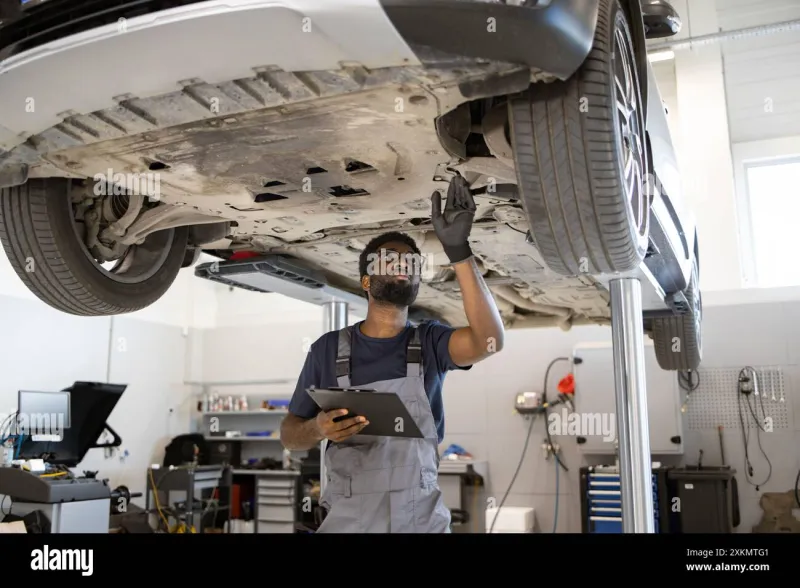
Photo: car inspector examining used vehicle on lift in service center, via c8.alamy.com
I want to tell you about the most humbling ninety minutes of my car-buying life, which took place 10,000 miles from my driveway, in a service bay in Bekasi, Indonesia, watching two technicians take apart the history of a used Camry I thought I knew everything about.
How I Ended Up There
I was in Indonesia for work with a day to spare, and a colleague — aware of my professional interest in how used cars get valued — arranged for me to sit in on a used-vehicle inspection at a Toyota dealership in Bekasi. The Camry on the lift wasn't mine, exactly. It was a car very much like mine: a mid-cycle XV70, similar mileage, similar age. But the inspection it received was the one every used Toyota at the facility goes through, and I was permitted to watch and ask questions.
I've bought six used cars in the United States. I've paid for Carfax reports, AutoCheck reports, pre-purchase inspections at shops that gave the car a twenty-minute once-over. I considered myself a careful buyer. I was about to be corrected.
The First Ten Minutes: Paperwork Meets Paint
The lead inspector started not under the car but with a paint thickness gauge, running it along every panel in a grid pattern. Numbers were called out; a junior technician logged them. Factory panels read consistently. The rear driver's door and quarter read high — repainted, competently, but repainted.
Then he cross-checked the odometer against service stamps and, tellingly, against wear patterns: pedal rubber, driver's seat bolsters, steering wheel rim. The odometer read 71,000 kilometers. Everything else said closer to 130,000. He didn't accuse anyone of anything. He simply wrote the discrepancy in his report, and the car's price — already agreed in principle — was adjusted on the spot, pending verification.
In America, I realized, I would have been told the odometer is what the odometer says. Title history is our trust mechanism. Here, the trust mechanism was a paint gauge and a pedal.
The Flood Test That Changed My View of Used Cars
Next came the part I'll remember longest. The inspector pulled the seats? No — he didn't need to. He removed two trim panels in the footwells and shone a light on the seat mounting bolts and floorpan seams. Then he opened the fuse box.
There it was: a faint tide line of silt residue inside the fuse box cover, slight corrosion blooming on two terminals, and a waterline ghost on the seat rail. This car had been in deep water at some point — deep enough to reach the cabin floor — then dried, detailed, and sold as a normal used car.
The technician's verdict was calm and immediate: not a car the dealership would certify. Flood cars fail in slow, expensive, sometimes dangerous ways — electrical gremlins, airbag module corrosion, brake system contamination.
Here's what shook me: I once bought a used car in Ohio that, I now understand, almost certainly had flood history. No Carfax flag. No smell. No title brand. It ate electrical parts for two years before I sold it at a loss. The information that would have saved me was sitting inside a fuse box the whole time, and no American inspection I ever paid for looked there.
The Suspension Audit
The final third of the inspection was a drive-and-listen: a technician took the car onto a route with speed bumps and broken pavement — Bekasi has no shortage — with a listening rod pressed to the strut towers, then came back and checked bounce, bushings, and ball joints on the lift. Rear shocks were flagged as tired. Front lower control arm bushings showed cracking. Total parts cost to sort the suspension: modest. But it went into the report, and the report governed the price.
What American Buyers Should Steal From This
I came away convinced that our used car trust problem isn't a paperwork problem — it's an inspection culture problem. We outsource trust to reports, and reports only know what's been reported. The Bekasi process outsources trust to eyes, gauges, and a checklist that assumes the seller may be wrong.
If you're buying used in the US, here's the distilled version of what I watched:
- Demand a paint thickness reading, not just a visual check for mismatched panels.
- Ask the inspector to open the fuse boxes and pull a footwell trim panel. Flood evidence lives there.
- Cross-examine the odometer against pedal wear, seat wear, and any service records — not just the Carfax.
- Insist on a road test over bumps with someone listening, not just a lift inspection.
- Pay for the inspection separately from the excitement of the purchase. A report that finds nothing is worth the fee. A report that finds a tide line in the fuse box is worth thousands.
The Camry I watched get inspected that morning wasn't a bad car. It was an honest car with a dishonest price tag, and ninety minutes of methodical attention corrected it. That's the whole argument, really: a used car's true history isn't in a database. It's in the fuse box, on the pedal rubber, and in the paint readings — if only someone looks.