Built Tough in the Tropics: How Bekasi's Brutal Roads Made Your American Toyota More Reliable
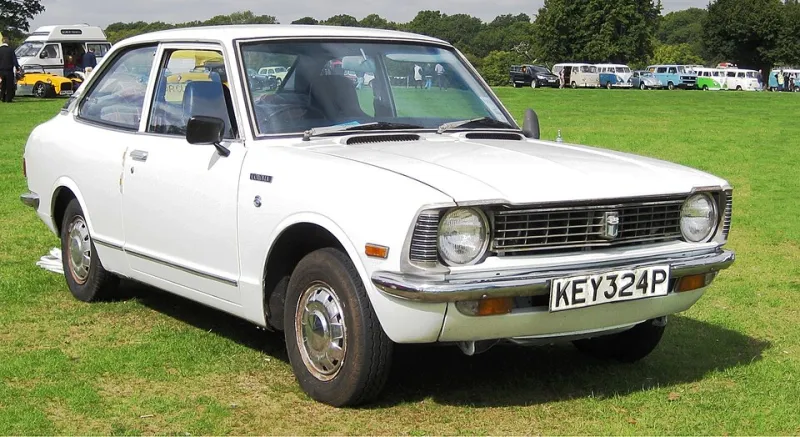
Photo: Kai3952, CC BY-SA 4.0, via Wikimedia Commons
Consider the road in front of our dealership on a wet Tuesday in February. The pavement buckles at the intersection. A drainage channel has partially overflowed onto the shoulder. A delivery truck ahead kicks up a spray of standing water that reaches door-handle height on the cars behind it. The air temperature is 34°C. It has been this way, more or less, for the past six months.
Now consider a Toyota Kijang Innova that has navigated this route twice a day for four years — serviced on schedule, driven hard, and still performing within factory specifications.
That vehicle, and the engineering decisions that made it possible, have more to do with the Toyota sitting in your American driveway than most people realize.
The Problem With Comfortable Roads
American highway infrastructure, for all its well-documented shortcomings, is among the most forgiving in the world when it comes to automotive engineering. Interstates are graded, drained, and resurfaced on cycles that most developing-market roads never see. The result is a testing environment that, while useful, cannot fully expose a vehicle's structural weak points.
Engineers have long understood that the most valuable durability data comes from markets where infrastructure stress is constant and unpredictable. Bekasi, a city of approximately three million people immediately east of Jakarta, qualifies on every relevant dimension.
The road network here is a living durability test. Subsidence from groundwater extraction creates unpredictable surface deformation. Monsoon flooding temporarily converts roads into shallow rivers. Tropical heat causes asphalt to soften and shift in ways that generate irregular surface profiles. And traffic density means that vehicles are rarely traveling at speeds that would allow them to absorb impacts gradually — they hit obstacles at low to moderate speed, repeatedly, every day.
What Bekasi Technicians Find First
At Pusat Toyota Bekasi, our service department processes a volume of vehicles that gives our technicians an unusually clear picture of where stress accumulates under genuine tropical operating conditions. The failure patterns they observe — and the absence of failure in well-engineered components — feed directly into Toyota's global quality intelligence network.
Several wear categories appear with notable frequency in our service bay.
Suspension geometry and bushing integrity are the first things our technicians examine on high-mileage vehicles. The combination of irregular road surfaces and loaded vehicle weights — Bekasi roads see a high proportion of family vehicles carrying full passenger loads — stresses suspension components in ways that American highway driving rarely replicates. Toyota's response, refined over decades of Indonesian market feedback, has been to specify bushing compounds and subframe tolerances that exceed what smooth-road performance would require.
Underbody sealing is another area where tropical operating conditions have driven engineering improvements. Standing water, road debris, and the particular chemistry of tropical mud create corrosion pathways that temperate-climate testing would underestimate. The underbody protection specifications on current Toyota models reflect lessons learned from markets where vehicles routinely drive through water that would qualify as flood conditions by American standards.
Cooling system calibration occupies a significant portion of our preventive maintenance conversations with customers. Ambient temperatures that rarely drop below 28°C, combined with stop-and-go traffic that limits airflow through the radiator, push cooling systems toward their design limits on a daily basis. Toyota's thermal management engineering — including coolant formulation, thermostat response curves, and radiator sizing — is calibrated to perform in Bekasi's conditions. In an American climate, that calibration means the system is operating well within its design envelope, which translates directly to longevity.
The Engineering Feedback Loop
Toyota's global product development process formally incorporates field data from diverse markets. This is not incidental — it is a deliberate strategy that the company has pursued since expanding into developing markets in the 1970s and 1980s.
The mechanism works as follows: dealerships in high-stress markets like Bekasi report warranty claims, common service patterns, and failure modes through a structured quality reporting system. That data is aggregated at the regional level, reviewed by product engineering teams, and — where patterns emerge — translated into specification changes that propagate across global production.
An American buyer purchasing a new Toyota Tacoma in Denver is, in a meaningful sense, purchasing a vehicle whose suspension tuning was influenced by roads that the Denver buyer will never drive. The Tacoma does not need to survive Bekasi's conditions. But because it was engineered to do so, it handles Colorado's mountain roads with a structural margin that a vehicle engineered only for American conditions would not possess.
Practical Implications for American Maintenance
Understanding the tropical origins of Toyota's durability standards has a practical application for American owners: the maintenance intervals and service specifications that Toyota publishes are not conservative estimates padded for liability purposes. They are calibrated to preserve performance in conditions that are more demanding than most American drivers will ever encounter.
This means that following Toyota's recommended service schedule in a temperate American climate is, in effect, maintaining a vehicle to a higher standard than its operating environment requires. The result, over a 10- or 15-year ownership period, is a vehicle that ages more slowly than its mileage would suggest.
Our technicians in Bekasi see this outcome regularly among customers who have maintained their vehicles consistently. The cars that survive Bekasi's roads for a decade are not exceptional — they are standard Toyotas maintained to standard intervals. The engineering margin built in for tropical conditions simply means there is more durability available than the local roads consume.
The Paradox Resolved
Bekasi's roads are not an obstacle to Toyota quality. They are, in a very direct sense, a contributor to it. The harshest operating conditions in Toyota's global network produce the most rigorous engineering feedback, and that feedback makes every Toyota more reliable — including the one parked in your garage in suburban America.
The next time your Toyota absorbs a pothole on a back road in Ohio without complaint, consider that its tolerance for that impact was calibrated somewhere considerably less forgiving than Ohio. The engineers had Bekasi in mind. Your suspension did not notice the difference.