The 15-Year Car: What Bekasi's Toyota Owners Understand About Longevity That Most Americans Have Forgotten
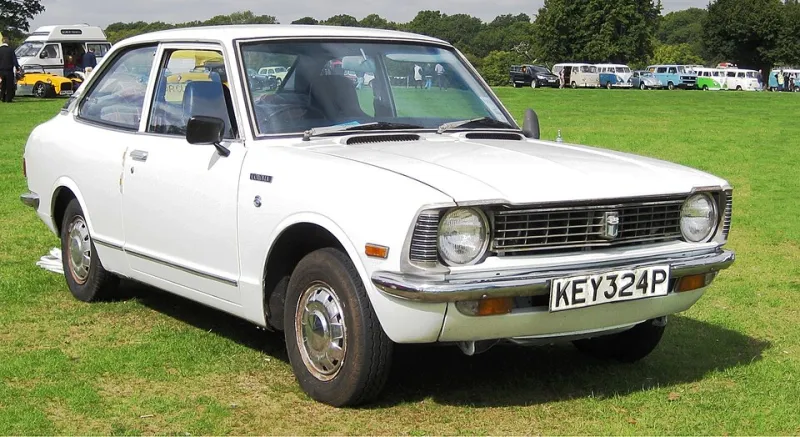
Photo: Charles01, CC BY-SA 3.0, via Wikimedia Commons
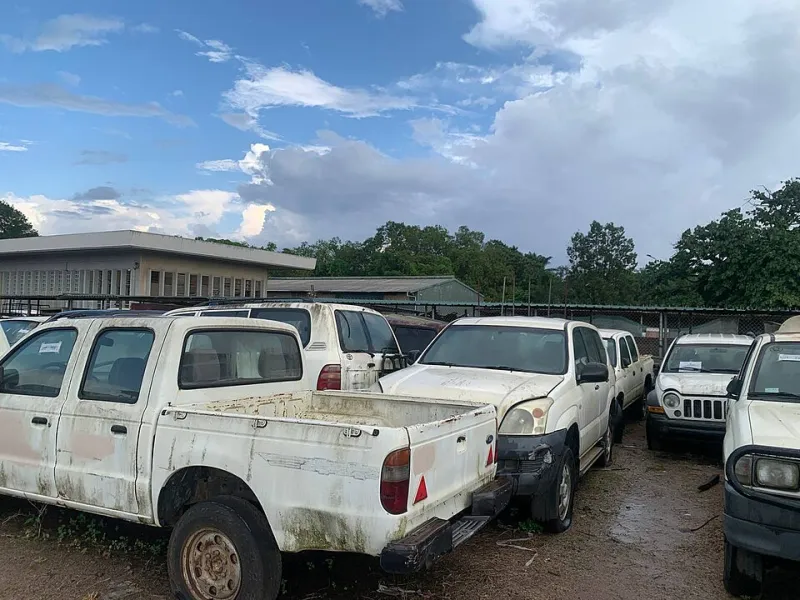
Walk through the service bays at Pusat Toyota Bekasi on any given weekday morning and you will likely encounter something that would surprise the average American car buyer: vehicles with six-digit odometer readings, bodies worn smooth by years of tropical sun, but engines that purr with the confidence of machinery that has been genuinely cared for. These are not collector's items or project cars. They are daily drivers — family vehicles that have outlasted multiple American ownership cycles without ever being considered disposable.
The contrast with the United States is striking. According to data from S&P Global Mobility, the average American keeps a new vehicle for approximately 6.5 to 8 years before selling or trading it in. In Bekasi and across much of Indonesia, that number routinely doubles. Understanding why is not simply an exercise in cultural curiosity — it is a masterclass in the economics and philosophy of vehicle ownership.
The Economics of Holding On
The most obvious driver of extended ownership in Bekasi is economic. New vehicles in Indonesia carry significant import duties and taxes, making the purchase price of a new Toyota substantially higher relative to average household income than it would be for a comparable buyer in the United States. When acquiring a replacement vehicle represents a much larger financial commitment, the calculus around maintenance changes entirely.
Bekasi service technicians at Pusat Toyota Bekasi frequently describe a mindset among their long-term customers that is almost philosophical in its consistency: the car is an asset to be preserved, not a subscription to be renewed. Rather than treating a high repair estimate as a signal to trade in, many Bekasi owners treat it as a straightforward investment decision — if the repair cost is less than the depreciation and acquisition cost of a newer vehicle, the repair wins every time.
This logic is not foreign to American financial reasoning, but it rarely governs American automotive behavior. The US market has been shaped by aggressive lease incentives, low interest financing, and a cultural narrative around newness that makes trading up feel like progress rather than cost.
Maintenance as a Long-Term Strategy, Not a Reaction
Perhaps the most transferable lesson from Bekasi's long-ownership culture is the approach to preventive maintenance. Technicians at Pusat Toyota Bekasi note that their most loyal multi-decade customers share a remarkably consistent habit: they treat the vehicle's service schedule as non-negotiable, even during financially difficult periods.
In the United States, deferred maintenance is epidemic. A 2023 survey by the Car Care Council found that a majority of American vehicles on the road had at least one service item overdue. For many US drivers, maintenance feels optional until something breaks. In Bekasi, where a breakdown can mean hours lost to some of Southeast Asia's most challenging traffic congestion, that attitude is a luxury few can afford.
The result is a compounding advantage. A vehicle that receives consistent oil changes, timely belt replacements, and proactive fluid checks at 50,000 miles is a fundamentally different mechanical object than one that has been pushed through deferred services. By the time a Bekasi-owned Toyota reaches 150,000 kilometers, its engine and drivetrain often remain in condition that would shame a neglected American vehicle half its age.
The Art of Parts Substitution
One practice common among experienced Bekasi Toyota owners that has no real American equivalent is the sophisticated use of aftermarket and reconditioned parts for non-critical systems. While the powertrain and safety-critical components are almost always serviced with genuine Toyota parts — something Pusat Toyota Bekasi strongly advocates — experienced owners have developed a nuanced understanding of which components can be sourced more economically without compromising reliability.
This is not the same as cutting corners. It is a form of mechanical literacy that most American drivers have never had reason to develop. Because Indonesian owners intend to keep their vehicles for decades, they invest time in understanding what their cars actually need versus what a dealership upsell might suggest. They know which gaskets are interchangeable, which sensors have reliable aftermarket equivalents, and which repairs genuinely require OEM parts.
The parallel in the United States would be a driver who has owned their Toyota Camry for 12 years, knows its service history intimately, and makes informed decisions about every repair. Those drivers exist — they are simply a minority in a market that has been structured to discourage long-term ownership.
What the Engineering Actually Supports
There is an important engineering reality underlying all of this: Toyota vehicles, designed and built to global quality standards, are mechanically capable of lasting far longer than the average American ownership cycle suggests. The 200,000-mile threshold that American drivers sometimes treat as a vehicle's natural end of life is, in the context of Bekasi's long-ownership culture, roughly the midpoint of a well-maintained car's useful life.
Toyota's reputation for durability is not marketing mythology. It is the product of engineering decisions — robust casting tolerances, conservative thermal management, and conservative powertrain tuning — that reward consistent maintenance with exceptional longevity. Bekasi's owners have simply chosen to collect on that promise in full.
Implications for American Buyers
For US consumers, the Bekasi ownership model carries several practical implications worth considering.
First, the true cost of vehicle ownership is rarely captured in the sticker price or even the monthly payment. Depreciation, sales tax, registration fees, and financing costs on a new vehicle often dwarf the cost of maintaining an existing one — particularly when that existing vehicle is a well-built Toyota with a clean service history.
Second, the resale value calculus changes when you commit to long-term ownership. A vehicle maintained with the intention of keeping it for 15 years rather than selling it in five will be serviced differently, documented more carefully, and ultimately represent a more honest picture of what that car is worth.
Third, there is a sustainability argument that American automotive culture has been slow to reckon with. Manufacturing a new vehicle carries a significant environmental footprint. Extending the useful life of an existing, well-maintained vehicle is, in many contexts, a more environmentally responsible choice than trading up to a new model — even a more fuel-efficient one.
A Different Definition of Value
The technicians at Pusat Toyota Bekasi are not evangelists for any particular ownership philosophy. They are pragmatic professionals who service the vehicles in front of them. But the pattern they observe daily — customers returning year after year with the same vehicles, adding mileage instead of adding debt — tells a story about value that the American automotive market has largely chosen to ignore.
The 15-year car is not a hardship in Bekasi. It is a point of pride. And for American drivers willing to look past the next model year, it might represent the most financially sound automotive decision they have never seriously considered.