Warranty Blind Spots: What a Bekasi Service Expert Sees in American Toyota Driving Habits
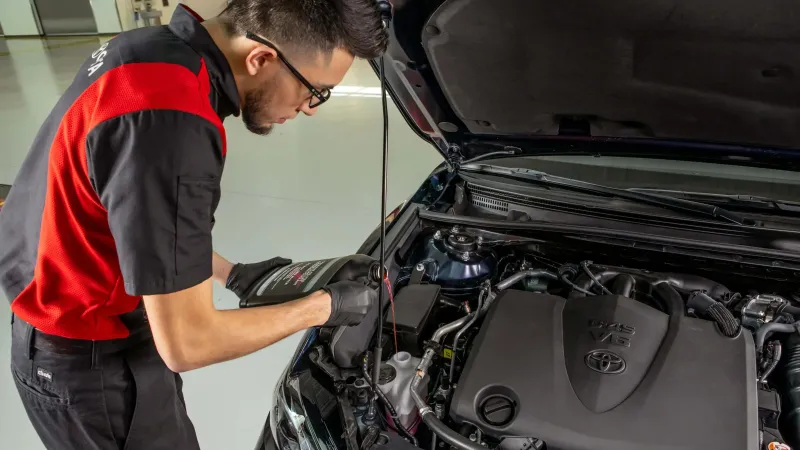
Photo: Toyota technician inspecting engine in service bay warranty maintenance, via pictures.dealer.com
Every Toyota owner in the United States receives a warranty booklet at the dealership. Most tuck it into the glove compartment and never open it again. That small act of neglect, according to Budi Santoso, a senior diagnostic technician at Pusat Toyota Bekasi, is where warranty problems quietly begin.
Budi has worked on Toyotas for over fourteen years in one of Indonesia's most demanding automotive environments. Bekasi — a densely populated city on the eastern edge of Jakarta — subjects vehicles to punishing stop-and-go traffic, intense tropical heat, and humidity levels that hover above 80 percent for most of the year. The conditions here have given Budi a precise understanding of how Toyota's engineering tolerances behave under stress. And when he reviews maintenance records from vehicles imported or transferred from the United States, he consistently spots the same patterns.
"American drivers are not careless," he says carefully. "They are simply operating under assumptions that do not match how Toyota designs its vehicles to be maintained."
The Long Highway Myth
One of the most persistent misconceptions among American Toyota owners is that extended highway driving is easy on a vehicle. The logic seems intuitive: no stop-and-go stress, steady engine RPMs, minimal braking wear. In practice, however, sustained high-speed cruising creates a specific category of thermal stress that Toyota's maintenance schedule is built to address at regular intervals.
When a vehicle maintains highway speeds for several hours — common on American interstates — the transmission fluid, differential fluid, and engine oil all reach elevated operating temperatures for extended periods. If oil change intervals are stretched beyond Toyota's recommended mileage because the driver assumes "mostly highway miles" means the oil stays cleaner, the degraded lubricant begins to lose its protective viscosity rating. Budi describes this as one of the most frequent warranty red flags he documents: engine or transmission wear attributed to "normal use" that is actually the result of thermally degraded fluid left in service too long.
Toyota's warranty language includes provisions related to maintenance compliance. If a dealer or claims assessor determines that fluid service intervals were not honored, coverage for related component failures can be denied. American drivers who log high highway mileage and extend their service intervals accordingly are exposing themselves to exactly this outcome.
Air Conditioning: A Compressor's Quiet Enemy
In Bekasi, air conditioning is not a luxury — it is a survival tool. Technicians here understand the A/C compressor system intimately because it runs almost continuously. That familiarity has taught Budi something that surprises many American customers: how the A/C system is operated matters as much as how often it runs.
A common American habit is to blast the air conditioning at its maximum setting immediately after entering a hot vehicle, then switch it off abruptly when the destination is reached. This pattern creates repeated thermal shock cycles within the compressor and the refrigerant lines. Over time, it accelerates wear on the compressor clutch and stresses the seals in the refrigerant circuit.
Toyota's warranty covers A/C compressor failures under specific conditions. What it does not cover is premature wear resulting from operational patterns that fall outside normal use parameters. Budi recommends a simple habit adjustment: allow the vehicle to ventilate for sixty seconds before engaging the A/C, set the fan speed before the temperature, and reduce the setting gradually rather than shutting the system off all at once. These small changes meaningfully extend compressor life and keep the system within the operating envelope Toyota's engineers designed for.
Maintenance Intervals: The Document Trail That Protects You
Perhaps the most actionable warning Budi offers concerns documentation. In Indonesia, Toyota owners at authorized dealerships like Pusat Toyota Bekasi receive a stamped service record with every visit. That physical record creates a verifiable history of compliance with manufacturer-recommended maintenance intervals.
Many American Toyota owners use independent oil change shops, grocery store service centers, or perform their own maintenance at home. None of these approaches is inherently problematic — but the absence of a consistent, verifiable service record creates a documentation gap that can be exploited during a warranty dispute.
If a powertrain component fails and Toyota's warranty team requests proof of maintenance compliance, a stack of receipts from different shops with inconsistent mileage intervals will not tell a favorable story. Budi's recommendation is direct: regardless of where service is performed, maintain a single organized logbook with dated receipts, mileage entries, and the specific services completed. Treat it with the same care as the vehicle title.
A Practical Checklist for US Toyota Owners
Drawing from Budi's diagnostic experience, the following checklist addresses the specific warranty vulnerabilities most commonly observed in American-use Toyotas:
- Honor oil change intervals by the book. Toyota's recommended interval is a ceiling, not a target. High highway mileage does not extend the interval — heat accumulation may actually shorten it.
- Check transmission fluid condition, not just level. Fluid that has darkened or developed a burnt smell is past its service life regardless of mileage.
- Operate the A/C system gradually. Avoid full-blast cold starts and abrupt shutoffs. Let the system ramp up and wind down.
- Keep a consolidated service log. Every oil change, filter replacement, and fluid service should be recorded in one place with dates and odometer readings.
- Schedule annual inspections at a Toyota-authorized dealer. Even if routine maintenance is performed elsewhere, a dealer inspection creates an official record and catches developing issues before they become warranty disputes.
- Review your warranty booklet's maintenance requirements section. The specific fluids, filter grades, and intervals listed there are not suggestions — they are the documented basis for coverage decisions.
The Cost of Assumptions
Warranty denials rarely happen dramatically. They accumulate quietly, through a series of reasonable-seeming decisions that collectively fall outside the manufacturer's defined maintenance parameters. Budi has seen the results many times: an engine replacement that should have been covered, a transmission rebuild that the warranty team declined because the service history was incomplete or inconsistent.
The Toyota warranty is a genuinely valuable protection. Preserving it requires nothing more than treating the vehicle the way Toyota's engineers designed it to be treated — with consistent, documented, interval-appropriate maintenance. The habits that erode coverage are rarely dramatic. They are the small, repeated decisions that seem harmless until the moment they are not.
At Pusat Toyota Bekasi, we work with Toyota vehicles under some of the most demanding conditions on earth. The lessons our technicians have learned in Bekasi's heat and humidity translate directly into practical guidance for Toyota owners anywhere in the world — including the American drivers who share the same vehicles, the same warranty documents, and the same engineering tolerances.